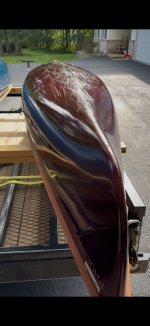
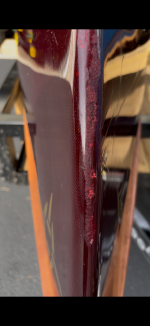
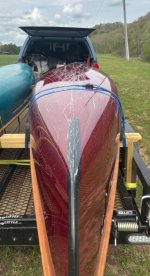
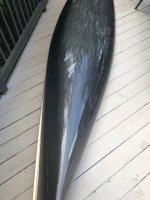
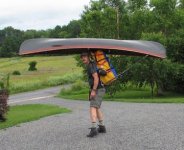
There have been discussions about moving to lighter weight canoes as we age but that tends to mean more fragile construction. I want a canoe that is both light weight and robust! The Flashfire is one of my favorite canoes. I had a Bell Flashfire that weighed about 36 pounds and then when a Placid Flashfire came up for sale some time ago I sold the Bell and bought the Placid Flashfire which weighs 29-30 lbs. It is such a delightful canoe to use for maneuvering around obstacles such as trees in a swamp or snags in a stream. Last week on Magees creek, a shallow stream that flows into the Bogue Chitto, I got over confident and made a last minute poor decision to take a less straight-forward route when approaching a snag. I hit the snag broadside and along with the thud there was a sickening cracking sound. The fabric doesn’t look torn, but the resin matrix is cracked in the chine and also at the shouldered tumblehome, along with gelcoat cracking on the outside. I usually try to baby that canoe but it is such a fun canoe to play with I got tempted to try a move I shouldn’t have. Back when Placid was making the DY fire models Charlie Wilson was touting Placid’s resin infusion technology and saying the Placid versions had greater strength compared to the Bell ones. I’m not sure about that now. I hit the snag with more than a gentle tap but I wouldn’t have thought it would cause cracking like it did.
What trade-offs do you make? Do you struggle with a sturdier but heavier canoe, paddle a light weight canoe but avoid trips or maneuvers that risk damage, or paddle a light weight canoe, take the risks and keep doing repairs? With the back problems I’ve been having, loading a canoe much over 30-33 lbs on the car has become quite a challenge so a heavier lay-up wouldn’t be a great option but neither do I want to keep having to patch my Flashfire nor am I ready to give up fun maneuvering in flat but flowing water that has obstacles that may at times push the limits of my ability to avoid them.
What trade-offs do you make? Do you struggle with a sturdier but heavier canoe, paddle a light weight canoe but avoid trips or maneuvers that risk damage, or paddle a light weight canoe, take the risks and keep doing repairs? With the back problems I’ve been having, loading a canoe much over 30-33 lbs on the car has become quite a challenge so a heavier lay-up wouldn’t be a great option but neither do I want to keep having to patch my Flashfire nor am I ready to give up fun maneuvering in flat but flowing water that has obstacles that may at times push the limits of my ability to avoid them.