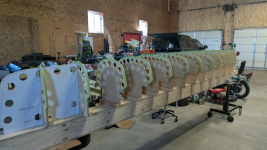
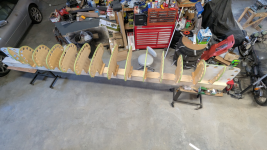
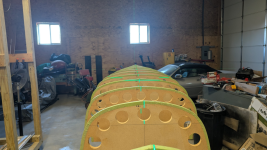
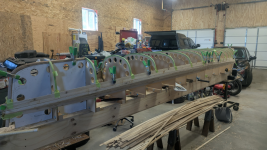
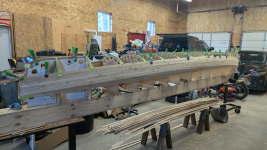
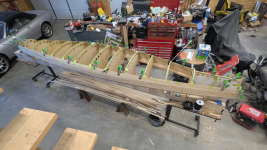
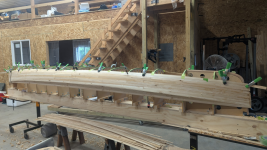
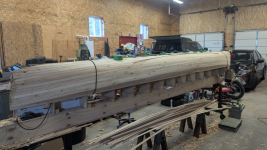
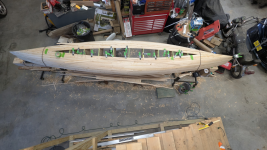
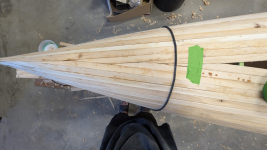
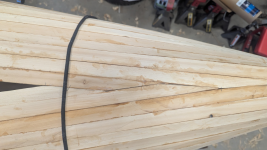
Well, it has taken way longer than I thought to get to this point. And that should surprise nobody who has done any project, let alone build a boat. This was due to a combination of thing, including some really nasty spring weather and the cleenup that involved. Also spending time helping make maple syrup. And just general life things.
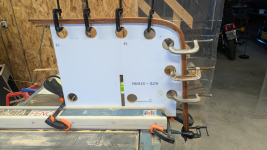
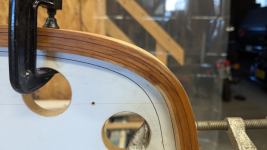
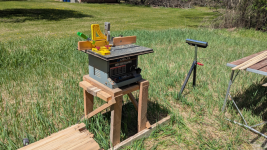
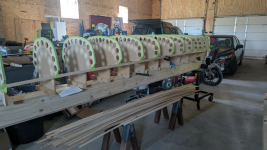
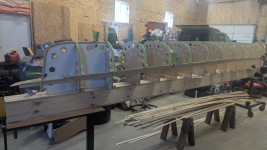
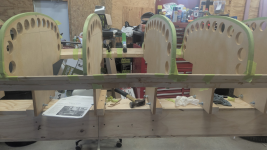
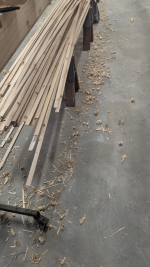
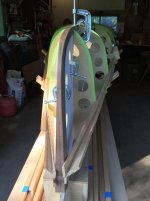
But I have made progress. I did end up getting a set of forms from a member here. Got them mounted to my strongback. Milled up my ceder strips. Cut them on a table saw with a thin kerf skill saw blade. Found out my router did not like to stay at height when milling the bead and cove. But was able to bower a sharper from the guy I was helping make maple syrup. So was able to get the bead and cove on the strips. Used cherry lumber to make the stems. Cut those into about 3/16" strips, soaked them for a few hours and used a heat gun to help form them in place. After letting them dry for a few days, pulled them out and then glued them in place. Formed them to how I thought they should be formed, more on that later. And was ready to start stripping. Got nervous, and found other work to do for a week.
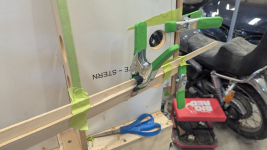
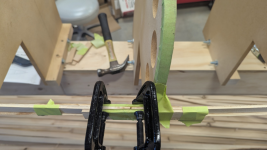
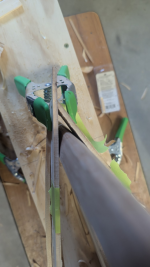
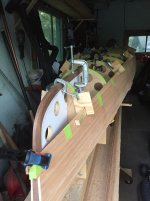
Decided to go for it, and started putting on strips. Used brad nails to hold on the first strip. And mostly tape and a few Jeff clamps from then on in. Got to the point of mitering in the tumblehome transition, and funny enough following the intstructions for the kite, it worked like they said it would. The only thing was I could have used a bit more lower strip in a few small areas, oh well. Kept stripping. Seemed to go faster once I got past that point. As I got near the chine, I also started using c clamps and umodified spring clamps instead of just tape to hold the strips to the forms. And this is about where I'm at. I started doing a bit of fairing today with a wood plane while waiting for strips to dry, but will have a ton more to do.
Turns out in this learning process of building a canoe, I've made some mistakes. The 8' strips I'm using meant I have a lot of splicing, and those as well as not perfectly clear strips mean I have a lot of gaps to fill. I also messed up the stems in 2 big ways. The first was that I did not have the right angle on the side for the strips (thought I had followed the plans, but guess not), and the second was I flipped the stern stem before cutting it to shape, so it really doesn't follow the form, but It is not an awful shape. I will say that when I do this again, I'm going try much harder to get full length boards/ strips, I think a lot of my gaps would be smaller if that were the case. The strip over a splice just doesn't always run perfect.
To help fix some of these mistakes I want to start filling some of the holes. I remember a few months ago there was a discussion about whether to use wood filler, or just stick to thickened epoxy. And I thought that most felt it was best to stick with the epoxy, but I don't remember if the wood filler would actually be a problem or not. I'll admit if it wouldn't mess with the fiberglass layup, I'm really tempted to use a plsticised wood filler, like Dap wood plastic. Would this interfere? I can also bite the bullet and buy the epoxy a bit before I'm ready for the rest of the glassing part, and get some filler and possibly wood flower. But would prefer to hold off on that expense a bit longer.
Now here comes the photo bomb.