Considering some of the replies so far...
That's the argument for breaking flatwater down into categories that reflect the difficulty and risk of paddling in various conditions encountered within that category. As with whitewater, each flatwater category would have ratings based on the range from least demanding to most demanding conditions. Currently the all encompassing category of flatwater is basically worthless in assessing the proficiency needed and risks involved in paddling a body of water. Quietwater and bigwater are probably the most used and best understood terms for categories of flatwater, but they're not defined and don't have a common understanding of difficulty ratings within each category. Moving flatwater has no common understanding and yet is where paddlers often get into trouble.
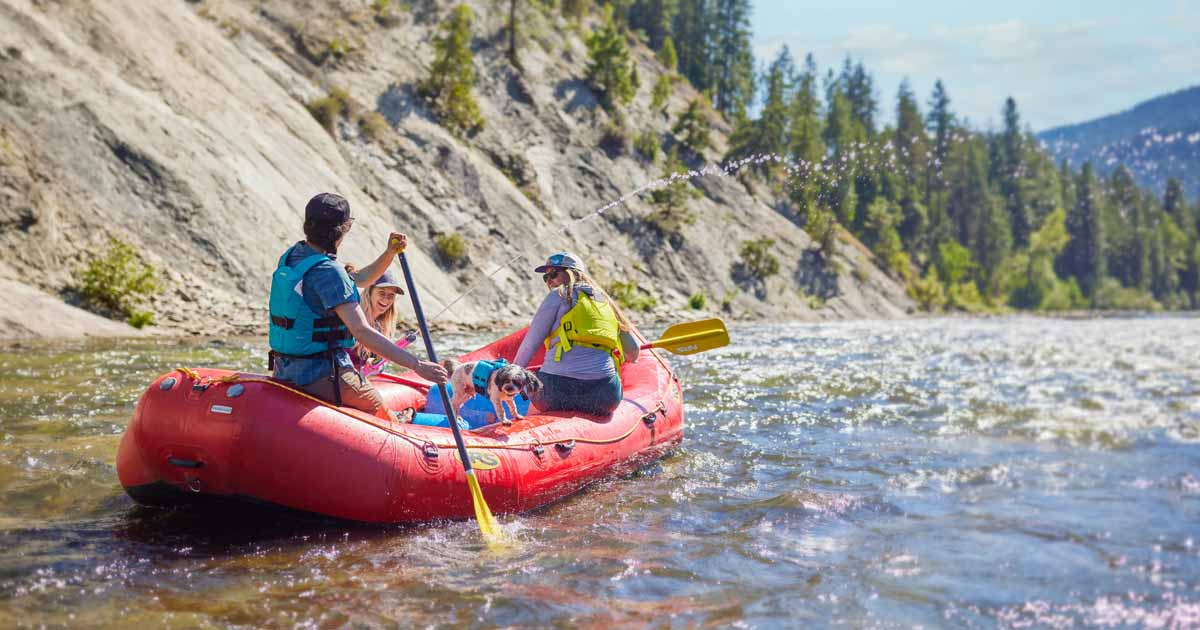
Maybe thinking of quickwater as class 1 whitewater misses the mark and it needs to be broken into two broad categories, much as quietwater and bigwater reflect the two broad categories of non-moving or slow moving water. For moving water not considered Class 2 to 5 whitewater, quickwater could be the less difficult category and something called "heavywater" (or something similar) for the more difficult category. Each category would include a range of difficulty/risk levels depending on conditions likely to be encountered.
So categories for the range of water types encountered might include: quietwater; bigwater; quickwater; heavywater; and whitewater. Not saying those are the right categories or terms, but something to start with and certainly more descriptive than simply whitewater and everything else; i.e., flatwater.
the problem with classifying flatwater is far more extreme than WW will ever be simply because WW is generally graded either by the average or peak for a particular section or river, while flatwater can encompass every description known because you can literally have riffles, blowdowns, strainers, ledges, ponds, lakes, overgrowth, tides, and meandering bends, all within a few hundred yards. Add in current, wind funneling, wind fetch, and the human factor (crowds, fences, bridges, etc.) and it becomes a real dogs breakfast.
Flat water has no gradient but it can be as rough as you want.
Lake Tahoe has a surf club. Big lakes with long fetch can have enormous waves.
That's the argument for breaking flatwater down into categories that reflect the difficulty and risk of paddling in various conditions encountered within that category. As with whitewater, each flatwater category would have ratings based on the range from least demanding to most demanding conditions. Currently the all encompassing category of flatwater is basically worthless in assessing the proficiency needed and risks involved in paddling a body of water. Quietwater and bigwater are probably the most used and best understood terms for categories of flatwater, but they're not defined and don't have a common understanding of difficulty ratings within each category. Moving flatwater has no common understanding and yet is where paddlers often get into trouble.
I see the problem with [quickwater] as the same problem with "Class 1" designations. My local river has a ~15 mile stretch that is called class one by everyone who ever wrote about it AFAIK. Yet it is sometimes strewn with serious hazards - sweepers, strainers, powerful eddys, etc. Right in the first hundred yards, last year there was a 90° bend with a strainer on the outside. I've watched multiple "experienced" class 1 paddlers get in trouble there, including several swims and one pinned boat. This whole stretch is what I think of as quickwater, and in my estimation is closer overall to the lower end of class one.
The snake in Idaho can be fickle.
How about 1a, 1b, 1c? With weather/hazard criteria identified for each?
Maybe thinking of quickwater as class 1 whitewater misses the mark and it needs to be broken into two broad categories, much as quietwater and bigwater reflect the two broad categories of non-moving or slow moving water. For moving water not considered Class 2 to 5 whitewater, quickwater could be the less difficult category and something called "heavywater" (or something similar) for the more difficult category. Each category would include a range of difficulty/risk levels depending on conditions likely to be encountered.
That's what the range of risks within each broad category would provide for paddlers. From limited risk with good weather and paddling conditions on quietwater to the potential for drowning or severe injury with bad weather and hazardous conditions on bigwater or heavywater. (Again, these are just suggested terms.)I often think about trips in terms of consequences. How likely am i have a problem? If i have a problem, what will happen?
So categories for the range of water types encountered might include: quietwater; bigwater; quickwater; heavywater; and whitewater. Not saying those are the right categories or terms, but something to start with and certainly more descriptive than simply whitewater and everything else; i.e., flatwater.