• Happy 100th, Norma Jeane (1926-62)! 🎥⭐👩🏼👄

As stable as a Camper but lighter

Joined
May 30, 2026
Messages
3
Reaction score
4
I might be asking for the impossible but here is my question:
Is there a canoe out there that has the initial stability of my Old Town Camper but weighs around 40 pounds or less?
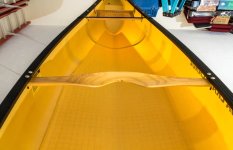
I have been paddling my camper for many years, first in New Hampshire and now in southwest Florida. I love it but I am looking to the future where the weight will be concern. The literature list the camper at 59 pounds but mine weights 65 pounds (I replaced the seats, yoke, and thwart).
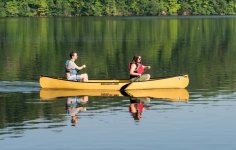
I paddle sitting in the bow seat facing the stern with some ballast behind the stern seat. I am happy with this arrangement but am open to a solo canoe. I test paddled a Wenonah Vagabond but found it a little to “tippy”.
The Vagabond was advertised as being very stable so that makes me think that perhaps I am asking for the impossible.
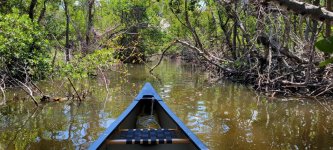
A secondary concern is durability of the canoe material. I like to explore the mangrove tunnels. I am a pretty good paddler but occasionally I run up against a mangrove root or have to “scoot” over a fallen tree. My Royalex Camper is basically bulletproof.
Light weight stability is definitely my primary consideration, but I don’t want a canoe that I have to baby.
 
I might be asking for the impossible but here is my question:
Is there a canoe out there that has the initial stability of my Old Town Camper but weighs around 40 pounds or less?
I have been paddling my camper for many years, first in New Hampshire and now in southwest Florida. I love it but I am looking to the future where the weight will be concern. The literature list the camper at 59 pounds but mine weights 65 pounds (I replaced the seats, yoke, and thwart).
I paddle sitting in the bow seat facing the stern with some ballast behind the stern seat. I am happy with this arrangement but am open to a solo canoe. I test paddled a Wenonah Vagabond but found it a little to “tippy”.
The Vagabond was advertised as being very stable so that makes me think that perhaps I am asking for the impossible.
A secondary concern is durability of the canoe material. I like to explore the mangrove tunnels. I am a pretty good paddler but occasionally I run up against a mangrove root or have to “scoot” over a fallen tree. My Royalex Camper is basically bulletproof.
Light weight stability is definitely my primary consideration, but I don’t want a canoe that I have to baby.
The Esquif Echo 2.0 was my solution (I think). I haven’t picked it up yet, and I have guilt about more plastic (I swore off it once), but I’m tired of cringing in shallow water swifts. The standard Echo lists at 42#, and the drier Echo 2 weighs 45. Only 15-17# savings, but I’m hoping it’s enough. Good luck.

I used my bathroom scale to weigh myself then holding the canoe, and my P15 is 63# with mods.
 
Last edited:
The Esquif Echo 2.0 was my solution (I think). I haven’t picked it up yet, and I have guilt about more plastic (I swore off it once), but I’m tired of cringing in shallow water swifts. The standard Echo lists at 42#, and the drier Echo 2 weighs 45. Only 15-17# savings, but I’m hoping it’s enough. Good luck.

I used my bathroom scale to weigh myself then holding the canoe, and my P15 is 63# with mods.
I just watched a video review of the Esquif Echo 2.0. It looks nice. When do you pick up yours? Please let me know what you think of its initial stability.
 
Do you feel kevlar is not tough enough? It's surprisingly tough and not hard to patch. Lots of options from 30 to 35 pounds.
Without Gelcoat. Gelcoat immediately makes a canoe a lake boat in my book. I don’t understand some of the hull offerings with Gelcoat. I’ve owned one, and it was painful to watch it crack up.
 
Welcome. I don't know much about commercially available boats but I can't imagine hurting anything by bumping into & sliding over submerged wood. Aren't Mangroves a lot like Cypress? (Annoying knees growing everywhere but they're not sharp or scratchy).

I'll second the DIY route if you're at all handy and interested in trying. Nothing quite like paddling your own stripper. I get pretty rough with mine and it seems happy. (Besides, we've been a little short on build threads lately.)

Best of luck with whatever you decide upon. (the Gulf coast is by far the best of Florida IMO)
 
Welcome @canoekevin !
It's been years since I was in a Camper, so you'll have to take what I say with a grain of salt.

Most of the lightweight canoes (40 lbs and under) I'm aware of are not going to have the flat bottom personality that the Camper is famous for. My first inclination (probably same for most of us) is to assure you that you'll get used to the livelier (aka tippy) feel of the typical lightweight composite designs. But there are at least a couple that I think you would be immediately comfortable in, and you might even find on the used market.

One that is obvious to me is made in the one man shop of Millbrook Boats - the Coho. A tandem size kevlar canoe designed for standing in and poling. Mine weighs right at 40 lbs without seats. Adding a solo seat would exceed that by only a couple pounds. Its bottom isn't flat, but close to it. It's very stable, and a little faster than the Camper. But it's not an option for buying new unless you live in or near New Hampshire, because Kaz, the builder, isn't shipping anymore. You'd have to be able to pick it up in person, I think.

Another one I think you would be comfortable in right away is the 14' Wenonah Fisherman. The Kevlar version is 36 lbs. It's a bit wide because it's a short tandem, but I found it to be pretty good as a solo paddled backwards from the bow seat. Stability at rest is its strong point, as it's designed for fishing. I also stood in mine easily to pole or to fish. I had it and the Camper at the same time and I would call them comparable in stability, but the Fisherman is more maneuverable and less effected by wind. I have seen quite a few of these in kevlar (most are in heavier ABS construction) go by on the used market.

I haven't paddled a Vagabond, so I'm not sure what you might not like in a dedicated solo canoe. Wenonah now makes a model called Basswood that they're calling the "ultimate fishing machine". They describe it as more stable than their Wilderness. It's a bit wide for a 15' 6" solo, so I would guess that it should be a pretty stable platform.

I used to worry about durability of kevlar canoes, but I've had five different examples, three of which have seen hard use and not suffered seriously from it. One of the other two is too pretty to abuse, so I don't. The other came to me with two minor cracks the were obviously the results of some serious abuse. The previous owner had simply duct taped the cracks and continued paddling it that way for years. I took it home and repaired the cracks with a little fiberglass and epoxy. It was an easy repair, which is typical for such canoes. I try not to abuse my kevlar canoes too much, but I don't baby them (except maybe that one). Short of running whitewater, you shouldn't worry about durability. Just don't drag on rocks or oyster beds, and always enter and exit with the whole canoe floating.
 
Last edited:
Without Gelcoat. Gelcoat immediately makes a canoe a lake boat in my book. I don’t understand some of the hull offerings with Gelcoat. I’ve owned one, and it was painful to watch it crack up.
All my boats have gelcoat, even my legacy WW ones- to me gelcoat is a sacrificial layer and takes most of the beating instead of the kevlar itself getting gouged and fuzzed up. I'd say 90% of the damage to most WW or moving water canoes is from grinding over or along rocks, not hard impacts (although I have intentionally boofed kevlar canoes in the past), and gelcoat is far easier to repair in the field than gouged kevlar- a little bit of epoxy ribbon worked into the gouge is all it takes for a field repair, spider cracks don't concern me at all.
 
Heck, my Swift P14 got cracked Gelcoat around the stem up to the gunnel just riding on my roof rack on a windy day crossing Illinois. Might be ok in South Florida mangroves, but I’d rather repair WW bumps on IXP or Black Steel than Gelcoat.
 
Last edited:
My preference is for no gelcoat, simply because it adds weight but no strength to the build. But lacking gelcoat, the outer layer should be glass or maybe carbon, otherwise scrapes and scratches in kevlar will fuzz. This is one reason why I like the layups from Millbrook and Clipper, for example.

Based on my experience with my Millbrook Coho that has been scraped over countless shoals and even banged on a lot of rocks, I don't consider the idea of gelcoat as a sacraficial ablative layer as necessary or even really useful. The bottom of my Coho is covered with fine surface scratches, but nothing that matters. As a practical matter, gelcoat isn't worth paying for or carrying. It just looks pretty.... for a while.

I will admit though, gelcoat is an effective sun block. So if the canoe is going to spend a lot of time stored in the open, it might eventually earn its keep.
 
Back
Top Bottom