• Happy Name Change: Longacre Square to Times Square (1904)! 🇳 🇾 ⌚

Risk Management is Sinking Outdoor Ed

Glenn MacGrady

Administrator
Staff member
Joined
Oct 24, 2012
Messages
6,752
Reaction score
13,221
Location
NW Connecticut
We had a discussion of this issue on this site in 2019, but the problem seems to have gotten worse.

*****

In today’s risk-averse culture, well-intentioned efforts to ensure safety are dismantling valuable community traditions and educational experiences.

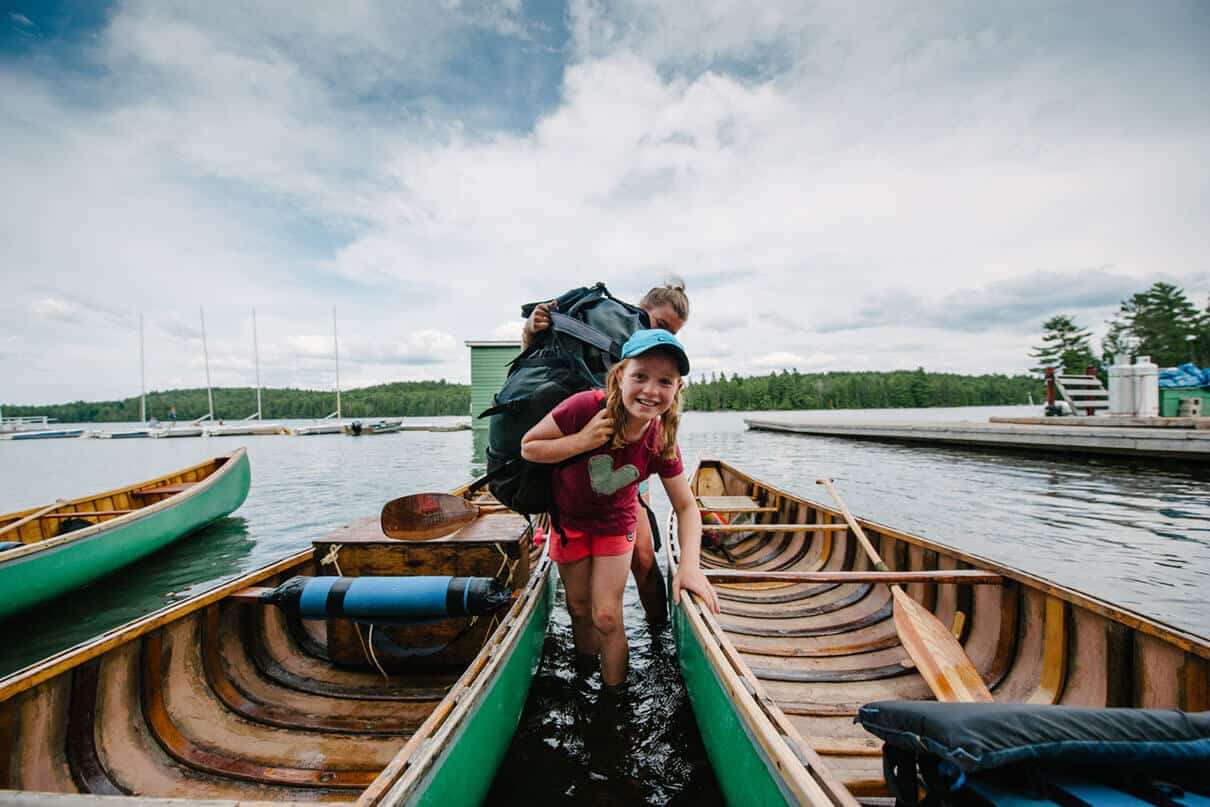
“We need to stand up for paddling and its minimal yet inherent risks,” wrote outdoor educator Bob Henderson in this magazine back in 2018 in an article titled: How Risk Management is Sucking the Life From Kids’ Paddling Trips (paddlingmag.com/0182). “If meeting safety standards is the sole mark of success for a paddling trip [then] the bar is set very low. Should safety be a given? Yes. All trips must be safe. Safety first, but not safety only.”

I’m sorry to say, Bob, it’s only gotten worse.

 
A bit over a year ago, USCA dropped their insurance coverage. The stated reason was cost. They told all event organizers to purchase their own insurance. For instructional events such as the freestyle symposiums, the available policies (at least those that we researched) cover the event organizers and liability for the host sites but they provide no coverage for the individual instructors.
 
For instructional events such as the freestyle symposiums, the available policies (at least those that we researched) cover the event organizers and liability for the host sites but they provide no coverage for the individual instructors.

I know you know this, Marc, since you alerted me to the relevant law the day we scoured New Jersey's remote Pineland wilderness for my canoe kneeling pad, which was in the bed of your truck the whole time. But I've since researched the law and offer a summary here for the information of those who may perform services for or with nonprofit organizations.

To protect uninsured volunteers of (governmental entities or) nonprofit organizations from negligence liability, the federal Congress enacted the Volunteer Protection Act of 1997 ("VPA"). An organization can qualify as a nonprofit under the VPA if it has federal 501(c)(3) tax status, or if it is organized and conducted for public benefit primarily for charitable, civic, educational, religious, welfare, or health purposes.

The VPA provides that a “volunteer” of a nonprofit organization generally will not be liable from harm caused if (1) the volunteer was acting within the scope of the volunteer’s responsibilities; (2) the volunteer was properly licensed, certified, or authorized by the state in which the harm occurred (if such authorization is required); (3) the harm was not caused by willful or criminal misconduct, gross negligence, reckless misconduct, or a conscious flagrant indifference to the rights or safety of the individual harmed by the volunteer; and (4) the harm was not caused by the volunteer operating a motor vehicle, vessel, aircraft, or other vehicle for which the owner or operator is required to possess an operator’s license or maintain insurance.

In short, the VPA protects volunteers against claims of ordinary negligence.

However, a "volunteer" cannot be an employee of the nonprofit organization. The VPA defines a "volunteer" as an individual performing services for a nonprofit organization or governmental entity who does not receive compensation for his or her services other than reasonable reimbursement for expenses actually incurred, OR any other thing of value in lieu of compensation in excess of $500 per year. This includes voluntary service as a director, officer, trustee, or direct service volunteer.

To make sure that service providers, such as canoe instructors, are VPA volunteers and not employees of the nonprofit organization, it should be effective to have each such person sign a contract with the nonprofit stating that he or she is a volunteer, who will receive no compensation such as salary or wages, and who will be reimbursed only for actual and reasonable expenses incurred. The volunteers should then keep records and receipts of all their relevant expenses.

States are permitted to offer greater protections for volunteers than the VPA, but not lesser, and some of them may have done so for certain circumstances.
 
We have experienced increased support at both the local and provincial levels. In Ontario, OPHEA is the organization that sets standards for physical education in provincial schools. Recently they amended their policy on Swim Tests for Wilderness canoe tripping. In the past, students had to pass a swim test in order to go on a canoe trip. The swim test is no longer necessary, students fill out a form answering questions about their swimming abilities and further discussions arise as a result. The end product is that every student must wear a life jacket whenever near or in the water (for instance, swimming at camp, etc) I had instituted that policy in 2017 after a drowning had occurred from a Toronto school in Algonquian Park. The province just caught up. This new policy was instituted by the province to increase student inclusivity in canoe related activities. It was instituted by myself as a logical extension of risk management. Also, OPHEA had made it compulsory for an adult lifeguard to be present on every trip. This was a major hurdle. Now, staff with White Water Rescue qualifications can be designated into that position. We will have three staff with this qualification by the end of June.

On the local level, the expansion of Land Based Learning and Indigenous student considerations have caused the the Board of Ed to be more open to outdoor learning opportunities. Our outdoor Ed class just completed a three day winter camping trip, where students stayed in canvas tents with wood stoves, the temperature even went to -25 C one night. Canoe trips, which in the past always had to take place on weekends, have now been incorporated into the regular school week, making it easier for staff and students to participate. Our program is well funded and well supported by the Board of Ed. This year I was finally given a dedicated canoe building class. The canoes will be used in the Outdoor Ed trips.

I know this is not the case in other school boards. Part of the problem is finding teachers with the necessary experience to run the programs. In the past, mistakes have been made where inexperienced instructors were put in charge of programs they never should have been around, and injuries and in some cases deaths resulted. I'm not sure what the overall future of Outdoor Ed is for high schools in North America, but for the moment, our program, which has been running since 1965, seems to be in good shape.
 
While I'm glad that northern boards are being more accomodating, in the south here if anything it's gotten worse- most boards have totally gutted the programs in the guise of cost cutting and perceived risk. I was volunteering with 2 different boards as well as multiple youth groups and the disconnection between the two was remarkable. My average risk assessment was 6-10 pages including maps and info about local hospitals and clinics and generally at least 2 extraction plans, but school trips seemed to easily run to 20 pages. One of my former youth is now trying to do the same but is running into multiple roadblocks- this will probably be his last season. the latest is increasing his personal liability from $1 mil to $5 million, and providing proof of competence in every facet from lighting a fire to communications, how do you get a certificate in fire lighting, and when was the last time you needed morse code??? He's had to buy insurance, satellite radios, and complete and renew WFR training all at his own expense...
Unfortunately while the province is headed in the right direction, many school boards refuse to accept ANY risk at all, some no longer even allow basketball or soccer during free time and have removed the outdoor courts because "johnny might get a bloody nose from a bouncing ball"
 
For sure, paper work has become extremely onerous, but it is a necessary evil. My old float plans, which were very practical, have been replaced by approximately ten forms of gobbly gook. Our Principal came up with the best idea this year, he ordered a Star Link mini, it is fully encased unit, powered by batteries, which will replace sat phones and sat texters. One of the staff on a trip has to have Wilderness First Aid, and the WWR qualification, but the funding is provided by the school for these qualifications. There are a variety of Ministry initiatives and programs that can be used to justify Outdoor Ed, it is just a matter of selling the local board on buying in.
 
Interesting that this thread should appear right now. Yesterday I received an e-mail from NOLS regarding the results of research they've been conducting for a few years. In short, it shows the value of outdoor experiences in young people as they are exposed to "risks" and opportunities to challenge themselves in the their expeditions. I'm sure you will be able to find the article if you look at the NOLS website.

From personal experience; I spent over 40 years working in collegiate outdoor recreation and education programs. My biggest frustration came from administrators, who had no idea what was involved in our program, making decisions that adversely affected the program. I was in the SUNY system and if a college program had an accident, everyone in the entire system had to alter their program to "solve" whatever the issue was. So many administrators told me about how "risky" the activities we were doing could be. The truth? All the statistics said it was riskier driving to/from the trip than anything we'd experience in the field yet they were all fine with driving. Why? Because they were familiar with that, they weren't familiar with paddling, winter camping, wild critters, etc.

Honestly, I don't have any answer other than to keep going and get kids outside. Sometimes you have to be willing to beg forgiveness instead of getting permission to do something; I operated that way my entire career. Let's just hope that districts like Mem's are on the increase instead of the other way around.

That's all for now. Take care and until next time...be well.

napper
 
Back
Top Bottom