• Happy Disobedience Day! 🙈👎🏼🙅🏼‍♀️🚫🪧

Cedar canoes aren't made from cedar trees

Glenn MacGrady

Administrator
Staff member
Joined
Oct 24, 2012
Messages
6,925
Reaction score
14,179
Location
NW Connecticut
This is thread is about pedantic, nitpicking, picayune—but accurate—vocabulary.

The arborists and forestry experts can correct me, and the WCHA may fire me, but my understanding is that there are no true cedar trees in North or South America or Europe.

The trees informally called eastern white cedar and western red cedar, for example, from which almost all wood/canvas and most strip canoes are built, are actually trees of the arborvitae (Thuga) genus within the cypress (Cupressaceae) family. The Alaskan or yellow cedar tree is also within the cypress family.

True cedars belong to the Cedrus genus within the Pinacae family, and are found only in the eastern Mediterranean, north Africa, Cypress, and the Himalayas.

So, put that in your cypress/canvas canoe and smoke it.
 
This is thread is about pedantic, nitpicking, picayune—but accurate—vocabulary.

True cedars belong to the Cedrus genus within the Pinacae family, and are found only in the eastern Mediterranean, north Africa, Cypress, and the Himalayas.

So, put that in your cypress/canvas canoe and smoke it.

Sigh. Lawyers these days!

No true cedars are native to North America, but I happen to have several planted on my own property, so to be accurate (as the original poster demands), there are some cedars here in North America, just not as many as people like to think. I have some Deodar cedars planted here and see them all over the Portland area where I live. I also planted a few Atlantica cedars, but don't remember where they are. Not even sure they still live. I was hoping to get some Cedar of Lebanon but don't think I ever managed to do so. I've even planted a few Bristlecone pines, just for the heck of it, even though they aren't cedars. Yup, I'm messing with the local ecology something fierce! Probably pissing off the native plant society people importing these exotic invasives! Tough toenail! < G >
 
No true cedars are native to North America

A pedantically accurate correction, Nick, and entirely within the subject matter and tone of the topic. Thanks.

Nevertheless, I will still maintain that it is unlikely that any "cedar" canoes have been made from the non-native true cedars that some private parties may have planted in the U.S. or Canada.

I, too, have planted a lot of non-native trees on my property, as well as some natives. That was 20-25 years ago, and I bought a lot of tree books at that time. I read about the cedar misnomers then, and @CaptainOllieWest's recent pictures of ancient and giant west coast cedars reminded me of the subject.

I do have a native "canoewood" tree on my property—the "canoewood" of the Appalachians, Mid-Atlantic and Southeastern regions of the U.S. A big and old one. No, I'm not talking about a birch tree. Natives did not make bark canoes from these particular native canoewood trees. They made dugouts.
 
Sigh. Lawyers these days!
No kiddin'... especially retired guys still looking to split a few hairs... :)

I'll have to remember this when someone refers to my boats as "cedar strip" canoes. (Could be worse, the other day at the bank, someone asked if I'd built "that kayak" that was sitting on top of my car. I struggled to be polite and I think I pulled it off)

I've yet to build anything from "Cedar" although I am working on getting some Cypress hauled up from South Carolina and will certainly build one from that. (The Arborvitae that we cut down a couple of years ago did not pan out)

Are the growth rates of true Cedars as slow as our local Northern White or the Western Red?
 
I think at this point the species is far less important than the style, "Cedar strip" to me invokes a particular style more than a species because you will find any of up to a dozen or more varieties of wood used, often with two or three species in the same boat such as "cedar", basswood, and mahogany...
In the industry North American cedars are mostly described as "American cedar", and African juniper is known as "African cedar", True cedars are only found naturally around the Mediterranean and foothills of the western Himalayas, and are rarely used for boatbuilding to to their small trunk size, limited availability, and high cost. Like many woods what science calls something and what industry calls it rarely align
 
Or what we know in North America as a Moose, the same animal in Europe is called an Elk. Names for completely different species in the Western hemisphere.
 
Last edited:
Interesting ... new information for me. There are so many things that have a common name that belies there scientific designation. I suspect a lot of the common names predate the scientific one,

I will likely still use "cedar" when answering questions ... most people just see a "wood" boat anyway.


Brian
 
The trees informally called eastern white cedar and western red cedar, for example, from which almost all wood/canvas and most strip canoes are built, are actually trees of the arborvitae (Thuga) genus within the cypress (Cupressaceae) family.
And then there's Douglas-fir (Pseudotsuga menziesii) which was originally thought to be a hemlock (Tsuga), thus, the subsequent corrective addition of Pseudo. Perhaps it would be fitting to rename the mis-named cedars as Psuedocedrus. ;)

One of my favorite specie names is Pinus contorta, which was found by European explorers at Astoria, OR, where the Pacific winds beat the trees into interesting shapes. The very same species, lodgepole pine, was named because if its obvious value as teepee and tent poles.
 
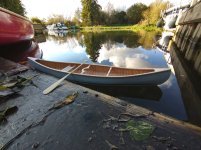
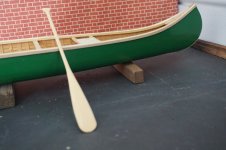
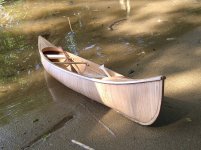
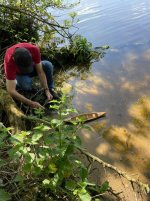
Glenn, I have to correct you. All the canoes in these photos are made from true cedar, Cedrus Libani (cedar of Lebanon) which in small quantities for small boats is far cheaper here than imported red and white 'cedar'

The last picture best indicates the size of canoe I'm talking about.


DSC_0788.JPG


DSC04620.JPG

DSC_1187.JPG

IMG-20220514-WA0002.jpg


Sam
 
I do have a native "canoewood" tree on my property—the "canoewood" of the Appalachians, Mid-Atlantic and Southeastern regions of the U.S. A big and old one. No, I'm not talking about a birch tree. Natives did not make bark canoes from these particular native canoewood trees. They made dugouts.

Since no one asked what Canoewood tree I was talking about, I'll keep talking to no one.

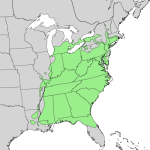
I have a Tulip Tree (Liriodendron tulipifera), which can grow as tall as 192 ft (58.5 m) and thereby ties the Eastern White Pine as the tallest tree in the eastern U.S. It is the tallest hardwood (broadleaf) tree in the USA, and, in addition to Canoewood, has several other common names such as Tulip Poplar, Yellow Poplar, Whitewood, Fiddletree, and Tulip Magnolia.

Here is its range:

1783103148805.png
 
Back
Top Bottom