• Happy Plum Pudding Day! 🟣🍮

Thoughts on Northstar Polaris or Northstar Boreas?

I have a Polaris in blacklite. It is light, fast and a stiff hull, I paddle solo - but am about 220 lbs. I paddle with my 2 dogs, both 65 pounds ... before they are wet and full of sand.

The canoe handles this weight well ... live weight going in the same direction - or - opposite direction ... can get a little tender, but once the dogs settle, it is very predictable and the canoe still has the same glide as when I paddle with just me and no dogs. It is a pretty nice hull to paddle. I do not use it much currently as my old dog moves too much, his joints hurt him and he repositions a lot ... the narrow hull is hard for him.

When I only canoed with 1 dog - 65 pounds, my self and a weeks worth of kit it was very fast, maneuverable and solid feeling. The live weight of two dogs "settling in " can be a little tender.

I think you will be very happy with a Polaris .

All this said, the Seliga has been on my lust list for years.

Bob.
 
As with many aging canoeists, we're considering replacing one of our canoes with something lighter.

Tom, I've never paddled either Northstar tandem or even seen them.

However, I'll be bold and speculate that you and Nancy are of a size and vintage that would enjoy, and use, a lightweight day tripping tandem, which can easily be flipped on a small vehicle, significantly more than some big honker tandem that can carry sinks and bathtubs on long overnight trips.

The Keewaydin 15 is a fine cruising solo canoe, and I believe @gumpus does too (although his is not ultralight), so I'm not sure what would be significantly negative about a Keewaydin 16 for a day tripping tandem. I believe it's Swift's best seller in the 16'-17' range, and it's the base hull (stretched) for the new Swift 18' Wabakimi.

The ideal situation, of course, would be to test paddle both the Polaris and the Kee 16, which you may be able to do with dealers of both brands within a day of you.

For an even more maneuverable and lighter weight day tandem, which also has a lower windage sheerline than the Polaris or Kee, and which could dance much better than either down the Batsto, consider a Savage River Harmony.

Whatever you get, keep the Curtis Northstar for a while. It's a historic canoe.
 
Whatever you get, keep the Curtis Northstar for a while. It's a historic canoe.
It is, and a lot of fun to paddle on all sorts of water. I can still lift it onto and off the car without too much trouble but I'd rather swap it out now while we can still get many more years out of a lighter canoe. A Swift Keewaydin 16 or Savage River Harmony would both be enjoyable, I'm sure of it, but the Polaris shares a history with the Curtis Northstar (?) and so I'm leaning in that direction. There are so many great canoes out there these days that choosing one over another isn't as much about finding the perfect canoe, but learning how to paddle each canoe perfectly. Or at least try.

Added comment: ..."paddle each canoe perfectly." Ha! I can only wish. :)

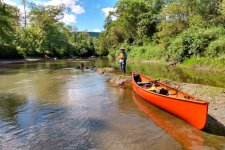
Nance - Poultney River-1 crop web.jpg
 
Last edited:
but the Polaris shares a history with the Curtis Northstar and so I'm leaning in that direction.

Not sure what you mean. All three canoes are 16' DY designs.

All three have very close specs, especially the Polaris and Kee. The main difference I see is that the Curtis Northstar is from DY's bubble-sided tumblehome era, before his shouldered gunwale era, and all the Swift Kee hulls are a return to that bubble-sided tradition but with the fullness carried further towards the ends. The Polaris hull, in contrast, has shouldered or tucked-in gunwales on top of a rather straight-sided or even slightly flared hull. I suspect these differences would be noticeable in efficiency and stability, but have no idea exactly how.

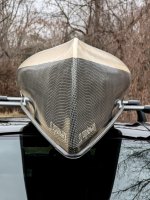
Polaris:

Northstar Polaris.jpg

Swift Kee 15:

Swift Kee 15.jpg

The Kee can be made lighter with Swift's superior and more aesthetic (and expensive?) technology.

Regardless, I fully agree with this philosophy:

choosing one over another isn't as much about finding the "perfect" canoe, but learning how to paddle each canoe perfectly.
 
All three have very close specs, especially the Polaris and Kee. The main difference I see is that the Curtis Northstar is from DY's bubble-sided tumblehome era, before his shouldered gunwale era, and all the Swift Kee hulls are a return to that bubble-sided tradition but with the fullness carried further towards the ends. The Polaris hull, in contrast, has shouldered or tucked-in gunwales on top of a rather straight-sided or even slightly flared hull. I suspect these differences would be noticeable in efficiency and stability, but have no idea exactly how.
Glenn, I took a quick look at the sides of the Northstar (hanging in the garage and bagged, so a very cursory look) and you may be correct about the bubble-sided Curtis and Swift canoes vs the shouldered Polaris. The Polaris side walls appear to share more in common with my Northstar Firebird than the other two. Looking at overhead images of the Keewaydin 16 (16' 0") and Northstar Polaris (16' 9"), the difference in bow/stern flare is noticeable, with the Polaris having sleeker hull lines, which I'm partial to. I wouldn't mind a bit more paddling efficiency and potential speed at the expense of a little maneuverability. I'll have to lower the Curtis Northstar tomorrow and see if I can take an overhead shot of the canoe for comparison, plus get a better look at the side walls.

The weight difference between a Kevlar Fusion Swift Keewaydin 16 (35 lbs) and a Kevlar Starlite Northstar Polaris (38 lbs) isn't a deal breaker for me. I do like the Carbon/Kevlar gunwales of Swift canoes but I can live with aluminum.
 
Looking at overhead images of the Keewaydin 16 (16' 0") and Northstar Polaris (16' 9"), the difference in bow/stern flare is noticeable, with the Polaris having sleeker hull lines, which I'm partial to.

My aging eyes didn't catch that the Polaris is 16-9, not 16-0 like the Keewaydin 16 and Curtis Northstar. So, yes, that makes the Polaris look a bit sleeker in an overhead plan view. But that doesn't mean it will paddle faster at hull speed or more efficiently at less than hull speed. Those are more a function of the waterline length and shape (prismatic coefficient).

From a historical lineage perspective, I'd say the bubbled 16-0 Keewaydin 16 (~2011) is more closely akin to the bubbled 16-0 Curtis Northstar (~1986) than the non-bubbled 16-9 Polaris (~2020) is. What did DY design in the 16+ range in between Curtis and Swift? Maybe the 16-6 Bell Northstar?

All very nice DY designs on the narrower side of the beam scale. Can't go wrong with any of them from a design perspective, but the weights range widely depending on the composite fabric and resin technique.
 
The weight difference between a Kevlar Fusion Swift Keewaydin 16 (35 lbs) and a Kevlar Starlite Northstar Polaris (38 lbs) isn't a deal breaker for me. I do like the Carbon/Kevlar gunwales of Swift canoes but I can live with aluminum.

Do not forget that the Polaris can be had with carbon gunwales (although I do not believe they are integrated as they are with a Swift) which both stiffen the Starlite boat and drop the weight by a pound. You can also get all carbon components to shave 3 pounds, but it's quite a bit more expensive. Finally the new stealth layup is quite alluring, and makes the Polaris clock in at less than 32 pounds!
 
What did DY design in the 16+ range in between Curtis and Swift? Maybe the 16-6 Bell Northstar?
That's what I thought I'd read or heard. I'll have to review the history Charlie Wilson has provided over the years.

Can't go wrong with any of them from a design perspective, but the weights range widely depending on the composite fabric and resin technique.
And cost. :)
 
Last edited:
Finally the new stealth layup is quite alluring, and makes the Polaris clock in at less than 32 pounds!
As I replied to Gumpus previously, that Stealth build emphasizes the adage of "lowest weight = highest price". (And it's more fragile.) I'm looking at dropping weight from 55 lbs to 38 lbs. I can live with that, until I cannot, and then I have a 22 lb solo to fall back on. Or into. :)
 
My aging eyes didn't catch that the Polaris is 16-9, not 16-0 like the Keewaydin 16 and Curtis Northstar. So, yes, that makes the Polaris look a bit sleeker in an overhead plan view. But that doesn't mean it will paddle faster at hull speed or more efficiently at less than hull speed. Those are more a function of the waterline length and shape (prismatic coefficient).

From a historical lineage perspective, I'd say the bubbled 16-0 Keewaydin 16 (~2011) is more closely akin to the bubbled 16-0 Curtis Northstar (~1986) than the non-bubbled 16-9 Polaris (~2020) is. What did DY design in the 16+ range in between Curtis and Swift? Maybe the 16-6 Bell Northstar?

All very nice DY designs on the narrower side of the beam scale. Can't go wrong with any of them from a design perspective, but the weights range widely depending on the composite fabric and resin technique.

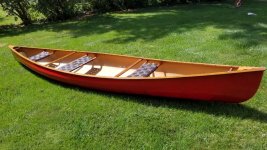
Yes I think the Kee15 is a good cruising boat snd I think a Kee16 would likely be a decent tandem. I've paddled both - both tandem and solo and the Polaris feels more special in efficiency and handling and maybe even stability (more settled). I could have purchased my late friend's gorgeous Kee16 (see pic - MUCH sexier than my Polaris...all cherry trim!) but I don't need 2 similar tandems and never considered keeping it over the Polaris. Even my friend was somewhat disappointed in the Kee16 in comparison to my Polaris and previous Bell Northstar. Paddling solo with my previous dog my load was around 275+ ish so similar to tketcham's, and the boat felt just a little bit less efficient than my big Swift Shearwater solo; there aren't a lot of tandems that I'd paddle upstream solo.
20200819_120225.jpg
 
So that's your Bell Northstar, Gumpus? I really like the color. ;)

What did DY design in the 16+ range in between Curtis and Swift? Maybe the 16-6 Bell Northstar?
I believe the Northstar Polaris is basically a revamping of the Bell Northstar based on Northstar's web page:
"The Polaris accelerates quickly and offers a lively paddling experience. Skilled paddlers raved about the performance of its predecessor and we named our company after it."

I gleaned some info from the postings Charlie Wilson made to the BWCA.com message board (2011) on the subject of the Curtis Northstar - Bell Northstar - Keewaydin 16 - Northstar Polaris continuum...

"This thread concerns comparing the Yost designed Curtis NorthStar/ Hemlock Eagle with Bell's Yost designed NorthStar and, we can assume, similar and more readily available alternatives which would include the Yost designed Swift Keewaydin 16. All three hulls have significant tumblehome which fits more compact paddlers well and improves solo paddling from a kneeling thwart. The Swift Kee 16 and Bell 'Star are very similar compact cruisers. The Eagle [and Curtis Northstar] is in family, but, with symmetrical rocker, more attuned to rivers and more advanced paddlers."

"The NorthStar/Eagle has comparable volume to the Bell NorthStar, the Eagle being the better moving water boat."

"Bell's NorthStar is special to me, as I wrote the design brief for it and was one of the group that came up with the Black/Gold laminate in the bar at the Madison Sheraton during Canocopis 1994. The Bell
[Northstar] is faster and tracks better due to differential rocker and a higher length/width ratio. Unfortunately the mold sits on the Wisconsin shore of the Mississippi River unused. neat little boat, but no longer sold."

"In summary, of the three very similar volume and tumblehomed hulls, the Curtis NorthStar/ Hemlock Eagle, 16'X35" has more stern rocker which helps in moving water. The Bell NorthStar
[and by association, the Northstar Polaris] is the sleekest of the batch, 16.6 X34.5" and has differential rocker. Neither are very available used because they are absolute top of the line canoes within their burden niche. Swifts Keewaydin 16 is Eagles size, 16'X35" but has differential rocker, so performs between it's sisters, which is an excellent place,and has the advantage of being readily available to the public."

"One should probably not[e] that most paddlers could not[e] discern performance differentials between these boats in a rough chop."
[My emphasis.]

Charlie Wilson, BWCA.com message board, 2011.

(Charlie, if you see this post, thank you for the background info!)

So I'm really leaning toward going with the Northstar Polaris. I like that it's a bit more efficient than the Curtis Northstar, and possibly the Keewaydin 16, while being comparably stable based on Charlie's comments. The replies to this thread reinforce that perspective. I don't plan on doing as much river travel these days, and if we do go out it would be Class 1+ stuff or less. The Polaris would do just fine in those conditions.
 
Last edited:
I'll offer a different perspective for a useful and desirable tandem canoe—just in general, not focusing on specific brands or models.

The perspecive is that of an empty nest couple who are in their 70s through early 80s. In particular, where one paddler is a lot more experienced than the other; and where the tandem canoe is not going to be paddled solo because, for example, the couple has age-appropriate solo canoes available.

Rabbinical and Jesuitical analyses and dissections of tandem hull specs, which may have been important at earlier ages, don't mean squat for this couple's tandem canoeing anymore.

This couple isn't going to be paddling the tandem fast, or dancing among river currents, or braving waters with stiff winds and buffeting waves, even if they ever did. At most, they will be recreationally paddling for a few hours in safe and calm waters near the shore.

The MOST IMPORTANT characteristics for a recreational tandem canoe at this stage of life and further into geezerhood are:

(1) is the dang thing sufficiently light and manipulable to be easily lifted and carried for short distances without risking damage to one's back, neck, heart or arthritic limbs; and

(2) is the dang thing sufficiently stable to get in and out of, securely and safely, with age-weakened legs and arms.

Virtually nothing else matters for the occasional tandem trips by this couple. Hence, virtually any reasonable tandem canoe having the two characteristics listed above will be satisfactory.

If this philosophy sounds somewhat unsophistictated or defeatist, consider that most tandem couples in this age group are winding down or have already quit; that they who best adjust to the times will prosper the longest; and that we'll all be defeated in the end.
 
Unfortunately the mold sits on the Wisconsin shore of the Mississippi River unused. neat little boat, but no longer sold.
Fortunately for us, this is no longer the case - the mold is in active use and this new Aero layup is intriguing! The only issue is the weight - I am hoping Redfeather develops a carbon gunwale system to bring the weight down into the upper 30 range... Redfeather Ursa Minor
 
So that's your Bell Northstar, Gumpus? I really like the color. ;)

That's my late friend's Keewaydin 16. Brian Moll was a long time employee of CanoeSport in Ann Arbor. His last 2 boats were a Kee16 combi (which I sold for him) and a Kee15 solo which I have . Both Autumn Red, Guide Fusion lay-up with interior gelcoat, no decals, and wood trim. Pic below shows Kee15. I think of Brian every time I lift it and sometimes say his name out loud. :)

PXL_20241021_170514535.MP.jpg
 
The MOST IMPORTANT characteristics for a recreational tandem canoe at this stage of life and further into geezerhood are:

(1) is the dang thing sufficiently light and manipulable to be easily lifted and carried for short distances without risking damage to one's back, neck, heart or arthritic limbs; and

(2) is the dang thing sufficiently stable to get in and out of, securely and safely, with age-weakened legs and arms.
Both reasonable primary characteristics but not the only ones...

Virtually nothing else matters for the occasional tandem trips by this couple. Hence, virtually any reasonable tandem canoe having the two characteristics listed above will be satisfactory.
Perhaps you're correct if "any reasonable" is within the range of characteristics I'm after. I've been fortunate to have paddled some great tandem canoes over the years so I'm guilty of wanting to be a bit more discerning of a canoe's performance, especially when I go out with a canoeist friend and we can have some fun paddling a lively, but relatively stable canoe. Our age group may not be as strong or agile, but we can still paddle a canoe. At this point, it could appear that I'm splitting hairs, or as a friend used to say, I'm trying to pick the pepper out of fly sh!t. But my original post was specifically about the seaworthiness of the Polaris as a lightweight replacement canoe. This thread has reinforced my original hunch and maybe provided some useful information about similar tandem canoes that are available.

Yup, I found the pepper I was looking for. 😄
 
I'll offer a different perspective for a useful and desirable tandem canoe—just in general, not focusing on specific brands or models.

The perspecive is that of an empty nest couple who are in their 70s through early 80s. In particular, where one paddler is a lot more experienced than the other; and where the tandem canoe is not going to be paddled solo because, for example, the couple has age-appropriate solo canoes available.

Rabbinical and Jesuitical analyses and dissections of tandem hull specs, which may have been important at earlier ages, don't mean squat for this couple's tandem canoeing anymore.

This couple isn't going to be paddling the tandem fast, or dancing among river currents, or braving waters with stiff winds and buffeting waves, even if they ever did. At most, they will be recreationally paddling for a few hours in safe and calm waters near the shore.

The MOST IMPORTANT characteristics for a recreational tandem canoe at this stage of life and further into geezerhood are:

(1) is the dang thing sufficiently light and manipulable to be easily lifted and carried for short distances without risking damage to one's back, neck, heart or arthritic limbs; and

(2) is the dang thing sufficiently stable to get in and out of, securely and safely, with age-weakened legs and arms.

Virtually nothing else matters for the occasional tandem trips by this couple. Hence, virtually any reasonable tandem canoe having the two characteristics listed above will be satisfactory.

If this philosophy sounds somewhat unsophistictated or defeatist, consider that most tandem couples in this age group are winding down or have already quit; that they who best adjust to the times will prosper the longest; and that we'll all be defeated in the end.
That is exactly why I still have the kevlar Malecite.
But if a refusal-resistant-priced Polaris appeared in my area, I'd still be after it. ;)
 
Back
Top Bottom