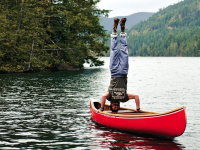
A couple of stories:
#1. My son and his new wife came to my Adirondack Lake camp for a visit last year. She's from Texas where they both live now, and she is unfamiliar with small boating of any kind, especially with paddling canoes. So let's go out for a canoe paddle. She was very concerned about tipping and getting wet, since she did not have extra clothing here at camp. “What are the chances I will get wet, she asked”, more than once? I would put them in my most stable canoe (by my standards), a Grumman aluminum tandem, or a Wenonah Monarch. My son has Boy Scout canoe experience mainly, and I trusted him to safely paddle stable with his wife. Wear your PFD. "There is a zero chance you will tip and get wet", I responded. "Zero chance". Several times. We carried the Grumman down the steps and floated it in ankle deep water. She was told she could stay there standing in the warm shallow water while My son and I went after The Wenonah for me and my wife. So what does she do, but try to get in the canoe when no one was looking. So did she step in the canoe center line? No, of course not. You don't have to guess what happened next. Thankfully it was a shallow soft sandy bottom in only 6 inches of water and she was not injured by the overturned aluminum gunwale. Oops. After finding some spare dry clothes in the camp and some shallow water canoe entry instruction, we went out and had a good time anyway with no further mishaps.
#2. My good friend and fellow BSA high adventure guide trainer of 30 years (who we often friendly tease and banter with and I often teach the canoe segment to our (typically college age) students at BSA National Camping School. He starts by taking the how to launch from shallow shore portion of the training, then turns it over to me to describe and demonstrate how to load the pristine canoe and launch from a jagged rocky shore dropping off into deep water with a strong onshore wind. Thanks, Pal.
#1. My son and his new wife came to my Adirondack Lake camp for a visit last year. She's from Texas where they both live now, and she is unfamiliar with small boating of any kind, especially with paddling canoes. So let's go out for a canoe paddle. She was very concerned about tipping and getting wet, since she did not have extra clothing here at camp. “What are the chances I will get wet, she asked”, more than once? I would put them in my most stable canoe (by my standards), a Grumman aluminum tandem, or a Wenonah Monarch. My son has Boy Scout canoe experience mainly, and I trusted him to safely paddle stable with his wife. Wear your PFD. "There is a zero chance you will tip and get wet", I responded. "Zero chance". Several times. We carried the Grumman down the steps and floated it in ankle deep water. She was told she could stay there standing in the warm shallow water while My son and I went after The Wenonah for me and my wife. So what does she do, but try to get in the canoe when no one was looking. So did she step in the canoe center line? No, of course not. You don't have to guess what happened next. Thankfully it was a shallow soft sandy bottom in only 6 inches of water and she was not injured by the overturned aluminum gunwale. Oops. After finding some spare dry clothes in the camp and some shallow water canoe entry instruction, we went out and had a good time anyway with no further mishaps.
#2. My good friend and fellow BSA high adventure guide trainer of 30 years (who we often friendly tease and banter with and I often teach the canoe segment to our (typically college age) students at BSA National Camping School. He starts by taking the how to launch from shallow shore portion of the training, then turns it over to me to describe and demonstrate how to load the pristine canoe and launch from a jagged rocky shore dropping off into deep water with a strong onshore wind. Thanks, Pal.
Last edited: