• Happy Pretend to be a Time Traveler Day! 🕰️🪱🕳️

Footbraces

I believe Hemlock installs them on the SRT regularly, but that’s a pretty narrow boat. A guy I met at the Ozark Rendezvous I believe had a set installed on a Yellowstone solo. Just epoxied in like the cross bar style brackets are.

Just out of curiosity, why won’t the cross bar style work on the new boat?
 
I believe Hemlock installs them on the SRT regularly, but that’s a pretty narrow boat. A guy I met at the Ozark Rendezvous I believe had a set installed on a Yellowstone solo. Just epoxied in like the cross bar style brackets are.

Just out of curiosity, why won’t the cross bar style work on the new boat?
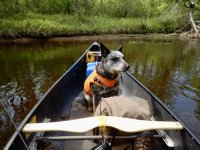
Well, it would work with an extended outter tube. The problem is I want to maintain gear capacity, as well as flexibility to sit in the stern or bow seat. I installed one on my last prospector 15 for paddling from the bow seat and it wound up crossing just beyond the yoke. I’ll have to see where my feet hit, but I’m thinking it will be too intrusive for maximum payload and trim adjustment. If I can make one cross brace work for either seat position without intruding on cargo areas I’ll install one. I think that’s why I installed the adjustable rail on the aluminum track in my last prospector, but I’m not certain.DSCN0583.jpeg
 
Last edited:
I have them in my Mohawk Odyssey 14 (they were already installed in the boat when purchased) and they give some relief from the cross legged or one leg crossed/the other at an angle sitting position. They are a little wide for these aged hips so not used much.
 
I personally don't think they'd be worth the inconvenience they will create. I've never felt that they would help me get to where I'm going any faster as I can already get as much power as I need without them. I like my seats high, at least 11 inches, and can get all the leverage I need. They could possibly help with a lower mounted seat though. Other than that they might help keep you comfortably on your seat with a little pressure, but I think too much pressure with your legs will sap energy that isn't going into your paddle.
 
Anyone installed kayak style footbraces on a canoe? The crossbar type won’t work for the new boat.

Standard on my solo builds, link to that, in last build

 
Standard on my solo builds, link to that, in last build

Nice boat Cruiser, do you paddle it with a single blade?
 
I personally don't think they'd be worth the inconvenience they will create. I've never felt that they would help me get to where I'm going any faster as I can already get as much power as I need without them. I like my seats high, at least 11 inches, and can get all the leverage I need. They could possibly help with a lower mounted seat though. Other than that they might help keep you comfortably on your seat with a little pressure, but I think too much pressure with your legs will sap energy that isn't going into your paddle.

After I first tried them I have since installed them in every boat I paddle. They vastly improve the comfort of my lower back in all of my boats, regardless of seat height (and I have them with both high seats and low seats). There is always some amount of effort expended in keeping you on your seat as you paddle (keeping you from pulling yourself off the seat forwards with each stroke). I never noticed how much until I got foot braces, and now I wouldn’t paddle without them.
 
Yessiree, the lower back is strained much more without a footbrace. You’re basically trying to transfer 100% of the torque from your stroke through your butt. In current, I can press on one foot and it slightly pivots the canoe, helps correct yall. Everything is so much more efficient going through the legs instead of the buttocks.
 
Well, being someone that deals with pain in most of my recreational pursuits, I'd say doing whatever hurts the least should be the priority. As far as my low back goes, having my feet under the seat works best for me.
 
Options are a good thing, especially when it comes to relieving pain. Even if I had footraces installed in my boat I change paddling positions so often I think I would use them only a small percentage of the time.

I still feel that with a high enough seat I get good enough leverage that the footbrake wouldn't help me much.

After I first tried them I have since installed them in every boat I paddle. They vastly improve the comfort of my lower back in all of my boats, regardless of seat height (and I have them with both high seats and low seats). There is always some amount of effort expended in keeping you on your seat as you paddle (keeping you from pulling yourself off the seat forwards with each stroke). I never noticed how much until I got foot braces, and now I wouldn’t paddle without them.
I've almost pulled myself off my seat before, but never when sober. Just kidding, never with my feet out in front of me, that I can recall. Out of curiosity how high are your high seats? It could also have something to do with different strokes. I mostly get my power from putting my weight on the paddle and pushing down rather than pulling back.
 
Options are a good thing, especially when it comes to relieving pain. Even if I had footraces installed in my boat I change paddling positions so often I think I would use them only a small percentage of the time.

I still feel that with a high enough seat I get good enough leverage that the footbrake wouldn't help me much.


I've almost pulled myself off my seat before, but never when sober. Just kidding, never with my feet out in front of me, that I can recall. Out of curiosity how high are your high seats? It could also have something to do with different strokes. I mostly get my power from putting my weight on the paddle and pushing down rather than pulling back.

My seat height varies with the boat: Starfire is angled at 8.75” in front, 10.25” in back, Polaris is a little higher and also angled at 9” in front 10” in back, prospector is flat at 8”, although at one time it was flat at 10”, Phoenix is factory sitting drops, I believe around 7.5”. I also paddle Dad’s MR Guide a lot and it’s very low at 6.5” or so. All have foot braces installed.

If someone is mostly a kneeler, they won’t help much since they’re not used much. If someone sits at all with their legs forward, they will help.

To move a boat forward, the paddle has to move backwards (or stay in the same place while the boat is pulled forwards, but in either viewpoint there is a backward force on the paddle). If there is a backward force on the paddle, the boat moves through the equal and opposite forward force that is transferred to the boat through the paddler. This is only accomplished through the paddler’s friction with the boat. However, butt on seat friction is not perfect, and there is always some tendency to slip forward (minute sliding between pants and seat, between pants and skin, etc). Often with no bracing, the lower back compensates by either shifting your torso weight back slightly with every stroke, tensing to stay in the same place on the seat, or by supporting the paddler in a leaned forward position as they keep their weight further forward to mitigate sliding. If your feet are braced however, you are able to use your legs to brace yourself on the seat, eliminating the work your lower back was previously doing by using muscles which are generally stronger and more used to the type of work they are being asked to do. Conversely, if you’re kneeling, the angle of your femur and the friction of your knees braced on the bottom of the boat accomplishes the same thing, although I would argue that energy transfer is still more efficient with seated foot braces. There are other benefits to kneeling however like being able to reach further or apply power with more strength and leverage, etc.

However, if you’re changing positions every frequently and can’t keep your feet braced consistently then I agree there would be very little benefit. As you said, everyone has to do whatever works for them to alleviate pain as necessary. We all have different situations to accommodate.
 
Last edited:
Conversely, if you’re kneeling, the angle of your femur and the friction of your knees braced on the bottom of the boat accomplishes the same thing, although I would argue that energy transfer is still more efficient with seated foot braces.
Unless you use thigh straps when kneeling. I don't think you can beat that for power transfer and control.

@Black_Fly - I was planning to put a foot bar in the Moccasin this winter, but I think instead I'm going to save money and weight by just glueing in a couple of foam wedges for foot pegs. It's cheap (I happen to have appropriate scraps), it's light, and it's reversible if I don't like it.
 
  • Like
Reactions: ABT
Unless you use thigh straps when kneeling. I don't think you can beat that for power transfer and control.

Good point, I was thinking more flatwater kneeling without thigh straps. In whitewater the straps would have the same effect as a foot brace as far as arresting forward slip, and additionally also allow you to affect the side to side “heel” of the boat by raising or dropping a knee on one side. I agree, hard to beat that.
 
Back
Top Bottom