

I've spoken before about using repurposed lumber for boat and paddle building. Too much useful lumber ends up in landfills because it's the easy way to get rid of it, once it's first use came to an end. Of recent, I've had a supply of western red cedar that spent the better part of a century as utility poles.
A year or so ago, I was offered some paulownia logs. Paulownia is technically a hardwood but it is very light, similar to balsa wood. Unlike balsa, paulownia has a nice looking grain structure and is considerably stronger. I use it to build ultralight paddles.
It isn't easy to purchase paulownia commercially. My original stock came from a good friend who managed a nature preserve where some trees were being logged and milled. That supply has been depleted. My new supply came from an invasive tree that was removed from an island in the Allegheny River. Some friends put a great deal of effort into getting those logs to me. I've spent the past several days (and several more to come) turning them into usable lumber.
Below is their story.
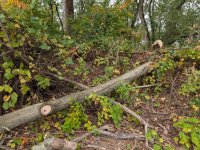
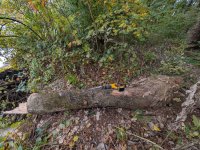
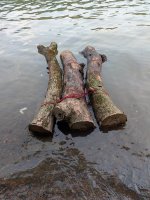
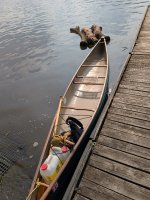
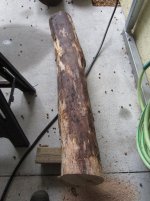
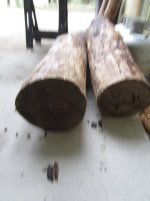
Sycamore Island is a 15 acre undeveloped island in the Allegheny River approximately 9 miles upriver from the confluence of the Monongahela River and Allegheny River, which form the Ohio River at Pittsburgh. The island was relatively wild until the very late 1960s, when the island was virtually clear cut and then developed as a boat marina (the Harbor Isle Boat Club), with over 15 docks, a fueling barge, incinerator for trash burning, electricity and lights, asphalt pathways, and a swimming pool. However, in 1972, Hurricane Agnes came through and virtually destroyed almost all of it. There were no subsequent attempts at development and nature reclaimed the island making it one of the few undeveloped riparian forested islands in the Pittsburgh area. In 2008, the island was purchased by the Allegheny Land Trust (ALT) as a conservation land, primarily visited by canoeists, kayakers, and SUP boaters. I became ALT’s volunteer Site Steward for Sycamore Island in 2010, creating and maintaining the trails and a primitive small campground site, cleaning up trash, planting native trees and shrubs to diversify the island’s forest, and removing (or attempting to control) invasive species, such as Tree of Heaven and Princess Tree (Paulownia tomentosa). A large Princess Tree was found on the island growing at the top of a 12 foot high river bank. This Princess Tree, with a trunk diameter of about 11 inches, was killed in 2022 and allowed to drop down toward the islands gravel beach, while still attached by its roots to the top of the bank. There, it dried in the air for almost 3 years before being cut up into approximately four 6 ft lengths that were tied to the back of a solo canoe and rafted (dragged) across the Allegheny River to the opposite shore. They were eventually taken by truck (thank you Bruce!) and delivered into Marc’s hands where they can become beautiful paddles and other creations.
Rick
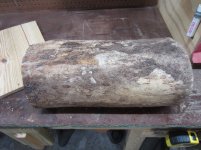
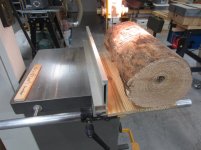
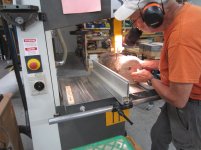
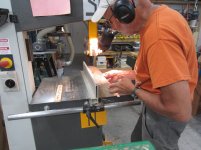
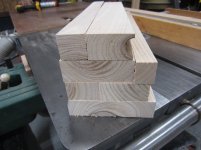
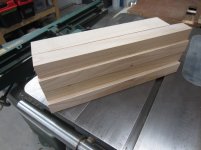
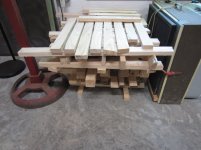
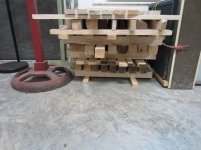
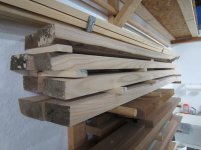
Today, I finished rough milling the lumber. By rough milling, I mean cutting the logs into boards/blanks that will dry properly and will eventually be dimensioned to become paddle stock. My best estimate, at this point is that there is sufficient material for between 25 and 30 paddles. For a small, custom operation like mine, that is a lot
A big thank you to my friends, Rick and Bruce, whose combined efforts got the logs to me.
Attachments
-
 PXL_20251011_164356599.jpg344 KB · Views: 15
-
 PXL_20251011_164643331.jpg345.2 KB · Views: 15
-
 PXL_20260727_194941656.jpg182.5 KB · Views: 15
-
 PXL_20260727_205010945.jpg214.1 KB · Views: 15
-
 IMG_1855.JPG187.2 KB · Views: 15
-
 IMG_1857.JPG70 KB · Views: 15
-
 IMG_1847.JPG172.8 KB · Views: 15
-
 IMG_1848.JPG133.3 KB · Views: 16
-
 IMG_1850.JPG134.9 KB · Views: 16
-
 IMG_1852.JPG133.5 KB · Views: 16
-
 IMG_1853.JPG126.4 KB · Views: 16
-
 IMG_1854.JPG123.4 KB · Views: 15
-
 IMG_1861.JPG118.1 KB · Views: 15
-
 IMG_1862.JPG132 KB · Views: 15
-
 IMG_1863.JPG112 KB · Views: 16


