• Happy Connecticut Day! 🇺 🇸 🇦 ❺

Perseid meteor shower under a new moon and a total solar eclipse on August 12, 2026

Glenn MacGrady

Administrator
Staff member
Joined
Oct 24, 2012
Messages
6,975
Reaction score
14,501
Location
NW Connecticut
1786312864043.png

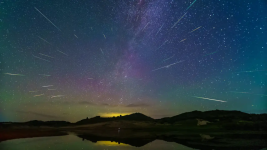
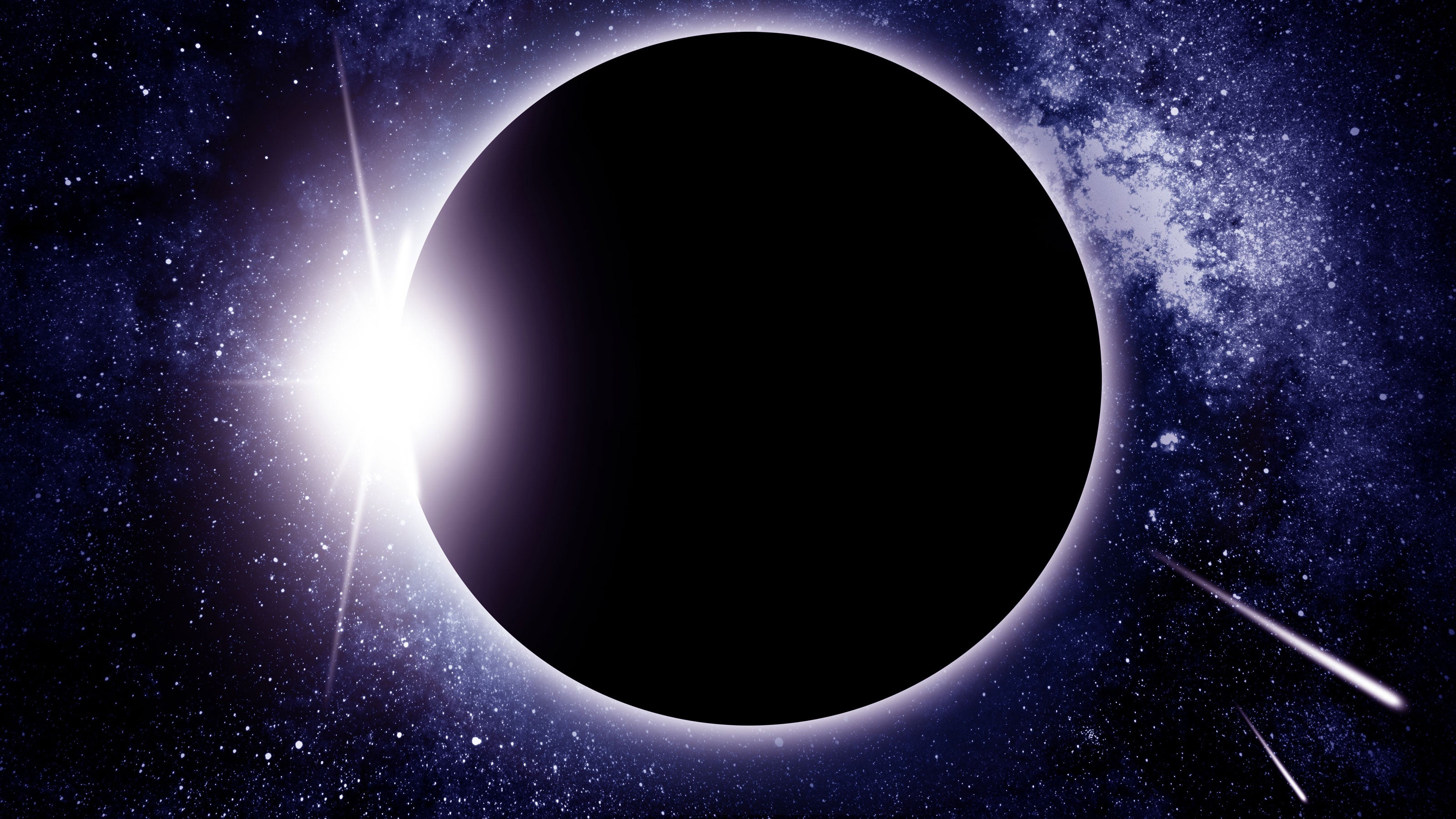
"The best viewing conditions in a decade for the Perseid meteor shower — under a new moon? And a total solar eclipse at the same time? It’s all happening on August 12."

"You can expect to see an average of up to 100 meteors per hour during the Perseids' peak."

"The Perseids can be seen from anywhere in the northern hemisphere.

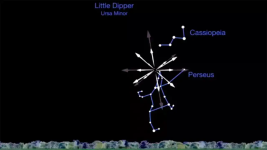
"You’ll want to find what’s called their radiant — the point in the sky from which they appear to come — which is near the constellation Perseus.

"To find it, face toward the northeast and look high in the sky for a bright, distinctive constellation shaped like a giant "W" or "M" (Cassiopeia). Just below that "W" is the constellation Perseus."
1786312789268.png

"Look to the sides of the constellation, not directly at it, since that’s where the best meteors will be on display."
 
While the radiant of the shower appears to originate from a singular point in Perseus, that is only the radiant, an area in the sky defined by motion of the earth in our orbit intersected with the general direction of the debris from the original source comet's orbit around the sun. A meteor may be seen in any part of the sky. if you trace its apparent track line backwards, it will only appear to come from the area of the radiant point. You see a similar effect while driving in a snowstorm with individual snowflakes all around you seemingly coming from a singular point in the sky. So if you do not have a good vantage point or something is blocking your view of Perseus, you can still see meteors anywhere in the sky. Note that you will generally see more, faster, and brighter meteors after local midnight, since after midnight your place on earth is pointed more toward the direction of our orbital travel, to intercept the meteors head on with our and its combined velocity vector.

While I have attempted to view the Perseids at every dark sky opportunity I have ever experienced in the decades since I was a young kid, rarely have I ever seen more than a very few per hour. You have to be lucky enough with timing to hit debris clusters in the approaching swarm.
 
Last edited:

Similar threads

Back
Top Bottom