• Happy Birthday, Chuck Berry (1926-2017)! 🎸

Perfect Trim?

Joined
Jun 3, 2015
Messages
3,121
Reaction score
10,497
Location
Anchorage Alaska / Pocono Mts.
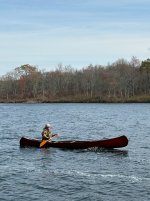
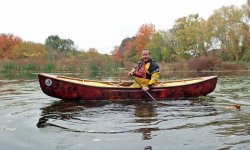
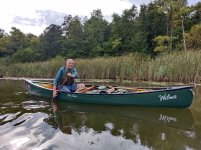
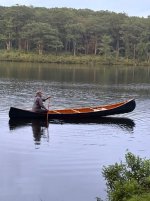
The first thing I have to say about this is that there is no one perfect `trim. Different situations and different boats call for different trim. A flat trim may work for narrow racing hulls, but I find it feels sluggish on my wider tandems. I prefer to be bow light. On the hulls I paddle it feels faster, probably due to less wetted surface creating friction with the water. There is a point where being too stern heavy slows things down, so there is a happy medium. Being bow light also give a boat more manueverability, especially when leaned over. Here are some pics of some bow light paddling.
IMG_4102.jpeg
My typical trim when solo in a 20' EM White

Attachment-1.jpeg
Another one, this was taken by my friend Larry, aka Penns Woods.
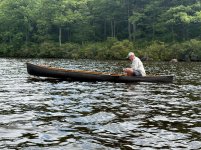
IMG_5707.jpeg
This is a friend in a Malecite who liked this trim for a day of fishing.
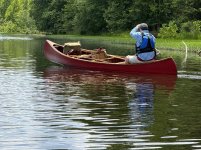
IMG_5062.jpeg
This is Tsuga8 from this forum in my 18' OT Guide. I'm not sure how well he liked it. It was a very windy day and this was about the only calm time he was able to give it a short try.
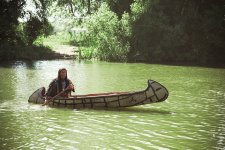


bigstock-North-American-Indian-36796682.jpeg
Here is a guy after my own heart.

IMG_5188.jpeg
This one was taken on a very windy day. It's not easy on a day like this, and it takes practice. There is no better time to practice paddling in wind then when it's windy, and it does take practice.


What kind of trim do you prefer, and why?
 
Depends on the water and wind. I've moved into the bow, sat solo in the stern, knelt in the middle, whatever made the boat do what I wanted with as little wasted effort as possible. I generally find that close to level level is a nice compromise for 99% of conditions. But I am inexperienced and ignorant.
 
I do not like any of the photographs above. Classic bow light by paddling solo from the stern seat is how canoes turn over.
Flat trim is fine with no wind. You can use your gear load to trim a canoe. I use my trained Border Collie for final trim.

When the wind comes up then other types of trim are important. Into the wind you want to be slightly bow heavy as an example. Otherwise the wind just keeps blowing you off course.

I remember a practice day before a week long trip. I took two guys out in a 17 foot canoe paddling tandem. The wind came up and they just went ashore and walked the canoe back. I was paddling by OT Guide 18 solo. I moved amidships, and then slight forward of the middle thwart to control the boat. They could not figure out how I controlled that big canoe in the that much wind. Both of those guys became bow paddlers on the week long trip in Oregon. After a week an athletic 18 year old was a pretty good paddler.
 
What kind of trim do you prefer, and why?

It depends on which canoe I'm in, what the wind is doing, and what I want to do.

Generally, I prefer to be more or less centered in the canoe. If I'm solo in a tandem canoe and I want to reduce skin friction, I'll heel the canoe to one side or the other. As we all know, that also makes it easier to turn from that position.

I can tell you that a canoe will typically have its fastest speed potential with an even trim, bow to stern - or slightly lighter in the bow. Most solo paddlers (including myself) rarely if ever see this in a tandem because we aren't strong enough paddlers to overcome the resistance. But polers see it all the time when going upstream against current.

A lot of what we assume about trim isn't necessarily true every time. For instance, we usually say to move toward the bow when paddling upstream upwind. But that doesn't always work, in my experience. I find quite often that I do better keeping my Solitude slightly bow light when paddling against the wind and it's not loaded down for a trip. That boat may be a special case, and it's a good thing it has a sliding seat. I remember well the time I was fighting wind while standing in the Coho with a pole and moving way into the bow to keep it pointed upwind and downstream. That was not a good position to attempt eddying out. Pretty hilarious. ;)

I can't think of any time while poling or snubbing in the NC Prospector 16 that I wished to be ahead of the yoke.

Likewise, we often say to stand ahead of the yoke or at least have the boat trimmed light in the stern when snubbing downstream. But sometimes doesn't work out well with a tailwind or if you want to change up and go faster than the current.

Any time I'm solo in a tandem, whether paddling or poling, I prefer to be able to move around some, but I'm going to be just aft of center most of the time.

In the MR Guide and now the Wildfire, I find it best to be trimmed pretty even regardless of what wind or water are doing. Same for the Solo 14 and the Vertige.The shorter solos don't seem to be as drastically effected by wind, and that's where the boat responds to corrections best.

With a tailwind, I almost always want to be light in the bow.
 
Last edited:
Classic bow light by paddling solo from the stern seat is how canoes turn over.
This thread isn't specifically about paddling from the stern seat, but I will say that you often get more stability being bow light than with a level trim. With a level trim your boat floats higher in the water and has a more narrow water line than when trimmed bow light. When bow light a wider part of the hull is submerged.

When the wind comes up then other types of trim are important. Into the wind you want to be slightly bow heavy as an example. Otherwise the wind just keeps blowing you off course.
The wind only blows you off course if you can't control your bow. I have had to move forward of center in wind before but not often and not lately. It works, but I wouldn't want to have to go far with that trim.

If I'm solo in a tandem canoe and I want to reduce skin friction, I'll heel the canoe to one side or the other. As we all know, that also makes it easier to turn from that position.
It does probably reduce friction, but the turning effect of heeling also slows you down.

I can tell you that a canoe will typically have its fastest speed potential with an even trim, bow to stern - or slightly lighter in the bow. Most solo paddlers (including myself) rarely if ever see this in a tandem because we aren't strong enough paddlers to overcome the resistance. But polers see it all the time when going upstream against current.
I'm not sure a flat trim is fastest in my large volume tandems. To me it makes the boat feel sluggish, like I'm pushing through too much water. With a racing hull I'm sure it's different. When I'm poling upstream I want to be especially bow light. When you're poling or paddling standing, you can trim the boat any way you want. I found my favorite trim for normal paddling was when standing just ahead of the stern seat. When leaned over it gave me just enough carve to help offset yaw.

For instance, we usually say to move toward the bow when paddling upstream. But that doesn't always work, in my experience. I find quite often that I do better keeping my Solitude slightly bow light when paddling against the wind and it's not loaded down for a trip.
I never heard that you should move towards the bow when going upstream. It sounds like a bad idea to me. When you are bow light you can use your stern like a rudder to help steer. You don't get to do this with a flat trim.
Likewise, we often say to stand ahead of the yoke or at least have the boat trimmed light in the stern when snubbing downstream. But sometimes doesn't work out well with a tailwind or if you want to change up and go faster than the current.
I always thought it was a given to have the upstream end of your boat trimmed light, either going upstream or down. If the wind is working against you in a current, you may not be able to find a trim that works.

Any time I'm solo in a tandem, whether paddling or poling, I prefer to be able to move around some, but I'm going to be just aft of center most of the time.
Just aft of center may work on narrow boats, but in tandems that are around 36 inches wide I get too much yaw and not enough forward propulsion.
My whitewater solos are trimmed bow light, but not quite that much. ;)
In solo boats you don't have the option to move around in the boat to change trim so much, so you have to work with one seat position to deal with all situations.
Going out with the bow in the air and no ballast seems like asking for trouble.
It sure could be, without the required skill.
 
The first thing I have to say about this is that there is no one perfect `trim.
We all have our preferences and I'm not a fan of the stern-loaded trim your examples show. But maybe that's because I don't paddle long tandem canoes solo very often. Still, even when I occasionally paddled my 18' Wenonah Odyssey or 16' Curtis Northstar solo I'd add some weight to the bow, kneel against the stern thwart, and paddle Canadian style. I didn't like the feeling of having the stern buried in the water and the bow floating in the air; felt unstable and didn't track well, especially with a breeze. The one time I did paddle from the stern seat was in a 17 ft tandem stock-class racing/cruising canoe I borrowed for a day of paddling and I had to load up the bow with chunks of firewood until the trim leveled out. I did that because sitting in the stern seat allowed me to comfortably reach the water for sit-and-switch paddling without having to heel the canoe. Otherwise, for solo paddling I MUCH prefer paddling a solo canoe trimmed for the conditions, as discussed in other threads.

This thread isn't specifically about paddling from the stern seat, but I will say that you often get more stability being bow light than with a level trim. With a level trim your boat floats higher in the water and has a more narrow water line than when trimmed bow light. When bow light a wider part of the hull is submerged.
If you're talking about initial stability then yes, an under-weighted tandem may be less stable initially. But sinking the stern into the water without additional weight is even more unstable, at least that's how it feels to me. With weight added to the bow and the canoe heeled to accommodate Canadian style paddling, a big tandem can become very stable. And a well designed and properly sized solo canoe can be equally seaworthy.

In solo boats you don't have the option to move around in the boat to change trim so much, so you have to work with one seat position to deal with all situations.
As for solo boats having limited trim options, moving weight around works just as well as it does for tandem canoes. Different strokes for different folks. :)
 
Last edited:
It does probably reduce friction, but the turning effect of heeling also slows you down.
Depends on the boat. In the Prospector at least, I found tracking to be neutral.

I'm not sure a flat trim is fastest in my large volume tandems. To me it makes the boat feel sluggish, like I'm pushing through too much water. With a racing hull I'm sure it's different.
At some length, we will all be overwhelmed. Especially with a paddle.

When I'm poling upstream I want to be especially bow light.
The only times I want the bow to be especially light when poling upstream is when climbing a significant drop, attacking some turbulence, or surfing a wave. Even less so in a rockered boat. When climbing a drop, I hop forward to level out as soon as the center of my canoe crosses the ledge. The quicker I can get the bow back down, the faster and easier I get off that ledge.

When you're poling or paddling standing, you can trim the boat any way you want. I found my favorite trim for normal paddling was when standing just ahead of the stern seat. When leaned over it gave me just enough carve to help offset yaw.
It is easier to carve from that position. I do have to be more aggressive when just behind the yoke. But I can get away with more aggression there. ;)

I never heard that you should move towards the bow when going upstream. It sounds like a bad idea to me.
Yep. Bad idea, and bad proofreading on my part. I meant to say "upwind". Thanks for the catch. I'll correct that directly.

I always thought it was a given to have the upstream end of your boat trimmed light, either going upstream or down. If the wind is working against you in a current, you may not be able to find a trim that works.
When I first started poling, bow light going upstream was the only way I could control the boat. As I progressed in skill, I found that unnecessary most of the time and upstream progress on the flats goes much easier and quicker with level or nearly level trim. Bow control comes mostly from subtle heeling and pole handling.

Stern light when snubbing downstream is the safe way to go because you're going slower than the current and we lack eyes on the back of our heads. But most of the time, I'm going faster than the current. I can still snub with level trim if I'm not getting into a technical rock garden.

Just aft of center may work on narrow boats, but in tandems that are around 36 inches wide I get too much yaw and not enough forward propulsion.
Again, I think this is going to be different from hull to hull. Never was a problem in my Prospector. It's been a while since I paddled the Malecite so I can't say, but it wouldn't surprise me if that was an issue in it.

In solo boats you don't have the option to move around in the boat to change trim so much, so you have to work with one seat position to deal with all situations.
This would be true for my Vertige with its bulkhead saddle. Not so much for any of my other solos.
 
Last edited:
This thread isn't specifically about paddling from the stern seat, but I will say that you often get more stability being bow light than with a level trim. With a level trim your boat floats higher in the water and has a more narrow water line than when trimmed bow light. When bow light a wider part of the hull is submerged.
This statement doesn't seem right to me. With a neutral trim (paddling more from the middle) the boat floats more evenly in the water, but I wouldn't say that it floats higher in the water or has a narrower waterline - at least in a way that would be less stable. With bow light trim as pictured in the first couple of pictures above (paddler in the stern seat) a good portion of the midships (the wider part) is actually up out of the water and the narrow section of the stern is submerged. Anytime I've done that (usually when my bow paddler gets out without stabilizing the boat), I find the boat is much less stable with my weight teetering in that narrow end. I pretty quickly move to the middle or get out myself.

Al, I know you like to paddle this way and it works for you. Personally, I prefer dedicated solo boats, so I rarely paddle solo in a tandem. When I do it is from the bow seat with a boat-load of gear in front so I end up with relatively neutral trim.

 
Last edited:
Since getting my MR Explorer, which I mostly paddle solo, I've come to prefer bow high and heeled, Canadian style, sitting in the bow seat facing aft. If the wind picks up I move to my knees and forward as necessary.
 
We all have our preferences and I'm not a fan of the stern-loaded trim your examples show. But maybe that's because I don't paddle long tandem canoes solo very often. Still, even when I occasionally paddled my 18' Wenonah Odyssey or 16' Curtis Northstar solo I'd add some weight to the bow, kneel against the stern thwart, and paddle Canadian style. I didn't like the feeling of having the stern buried in the water and the bow floating in the air; felt unstable and didn't track well, especially with a breeze. The one time I did paddle from the stern seat was in a 17 ft tandem stock-class racing/cruising canoe I borrowed for a day of paddling and I had to load up the bow with chunks of firewood until the trim leveled out. I did that because sitting in the stern seat allowed me to comfortably reach the water for sit-and-switch paddling without having to heel the canoe. Otherwise, for solo paddling I MUCH prefer paddling a solo canoe trimmed for the conditions, as discussed in other threads.
As far as Canadian style paddling there isn't much difference between bow seat backwards, kneeling at the stern thwart or sitting in the stern seat. All will give you a stern heavy trim. You are right about it being more comfortable paddling from the stern seat. You can also lean the boat from that position for Canadian style paddling, or not lean for hit and switch. Or you can do both, lean towards your onside and hit and switch. Doing this carves your boat towards your paddle side, offsetting the yaw, and YOU can control when to switch instead of your boat and the wind. You still get this effect from the bow seat backwards position, but you don't get as much carve. The deeper your stern, the more carve you get. I commend you for even trying the stern seat solo in a tandem, as it's about as taboo as "standing in a canoe" and I think we know that's not true.
Depends on the boat. In the Prospector at least, I found tracking to be neutral.
I wasn't referring to tracking, just speed. I find my boats are faster when not leaned at all. The more you lean the more it slows you down. I have to remind myself to not lean more then I have to when offsetting yaw.
t is easier to carve from that position. I do have to be more aggressive when just behind the yoke. But I can get away with more aggression ther
If I recall you were a devotee of Harry Rocks style of poling. I'm more from their Garret Connover style, for tripping. As such I have my packs just ahead of the center, so I can stand back further in the boat and have the same trim as you. With packs in my boat when snubbing I can lighten my stern a lot by standing just behind the center thwart.
This statement doesn't seem right to me. With a neutral trim (paddling more from the middle) the boat floats more evenly in the water, but I wouldn't say that it floats higher in the water or has a narrower waterline - at least in a way that would be less stable. With bow light trim as pictured in the first couple of pictures above (paddler in the stern seat) a good portion of the midships (the wider part) is actually up out of the water and the narrow section of the stern is submerged. Anytime I've done that (usually when my bow paddler gets out without stabilizing the boat), I find the boat is much less stable with my weight teetering in that narrow end. I pretty quickly move to the middle or get out myself.

Al, I know you like to paddle this way and it works for you. Personally, I prefer dedicated solo boats, so I rarely paddle solo in a tandem. When I do it is from the bow seat with a boat-load of gear in front so I end up with relatively neutral trim.

It may not make a difference in stability in boats with good initial stability. I notice it in my Seliga, which has a very round hull and has twitchy initial stability. If you look at the pictures again I think you can see that the widest part of the boat is in the water. In general, the stability when in the stern seat probably feels different then being in the center, but there is still stability there. Maybe not as much, but enough that it still feels comfortable to me. There are enough benefits in paddling from the stern seat to sacrifice some stability.

Next time you're in a tandem with a load give it another try, just don't be too concerned with a flat trim. It will make it hard to turn. Also if you are on moving water keep all your gear ahead of center so it's not in the way if you have to move forward to change your trim quickly. In whitewater where you have to do a lot of maneuvering I would go with the bow seat backwards approach.
 
If I recall you were a devotee of Harry Rocks style of poling. I'm more from their Garret Connover style, for tripping. As such I have my packs just ahead of the center, so I can stand back further in the boat and have the same trim as you. With packs in my boat when snubbing I can lighten my stern a lot by standing just behind the center thwart.
I am a disciple of Harry Rock's modern poling technique. As such, I have employed the "wildwater" downriver method whenever possible. That is pretty much using the tandem canoe while standing with a pole the same way a solo canoe is paddled with a double blade. Can't say I've been in a technical snubbing situation with a tripping load, but I expect that I would be tossing some of my load that's behind me forward as you describe.
 
Last edited:
I wasn't referring to tracking, just speed. I find my boats are faster when not leaned at all. The more you lean the more it slows you down. I have to remind myself to not lean more then I have to when offsetting yaw.
Well, there's a lot of nuance to discuss there, and I have to start with agreeing with your point to some degree. We know from the principals of naval design that a longer waterline allows a higher theoretical hull speed. We also can demonstrate that heeling most tandem recreational canoes can cause the waterline to be both shorter and narrower. So the theoretical speed limit should be slower. But the drag coefficient is less, so a paddler who can't drive that canoe to anywhere near its design theoretical hull speed (that would be me) can paddle it faster, or with less effort at least, than with the hull flat upright. Except - if heeling induces yaw that requires significant correction, that will add further loss of speed and more effort. That's going to matter to different degrees for different canoes (and paddlers).

I'm guessing that this may also apply with your 18' tripper when paddled from the stern seat so as to raise the bow out of the water, especially with the roundish bottom. Less effective waterline reduces theoretical speed but less wetted surface reduces effort required, thereby allowing a greater speed than with that 18' hull sitting flat in the water. Per your own account (wich seems reasonable to me) paddling from that position requires less correction, therefore little or no further loss of efficiency.

It makes sense to me that you're finding that to be the most efficient way to paddle your long tripping canoe in your environment. I'm just saying that doesn't necessarily hold true for every tandem canoe paddled or poled solo, and certainly not solo canoes.
 
As far as Canadian style paddling there isn't much difference between bow seat backwards, kneeling at the stern thwart or sitting in the stern seat. All will give you a stern heavy trim. [Emphasis added.] You are right about it being more comfortable paddling from the stern seat. You can also lean the boat from that position for Canadian style paddling, or not lean for hit and switch. [Emphasis added.]
I'm going to disagree with you about the stern heavy trim. When I kneel against the stern thwart of my Odyssey I don't raise the bow out of the water anywhere near as much as the photos you provided. That's why I don't sit in the stern seat, at least not without weighing the bow down.

I'm also going to disagree with you about sit-and-switch paddling from the stern with the bow that far out of the water. A tandem canoe with its bow as high out of the water as you show isn't going to track and glide anywhere near as well as when it's trimmed relatively level, which can be accomplished while sitting in the stern seat by adding weight in the bow. A stern heavy canoe with the bow out of the water might accelerate better because of reduced skin friction, but once up to speed using sit-and-switch, my level-trimmed Odyssey can carry speed much more effectively. That was exactly my experience while paddling the 17' tandem cruiser: I spent the first half of the day trying to paddle sit-and-switch from the stern seat with the bow in the air and then Canadian style from the center of the canoe and neither worked as well as leveling the canoe out and paddling sit-and-switch from the stern. I got that canoe going along at a good clip once I figured out what worked best. For a casual day trip though, I'd rather paddle Canadian style from the center of the canoe, or better yet, paddle a solo canoe. ;)
 
Back
Top Bottom