• Happy 1st Performance of Handel's "Messiah" (1742)! 🎹🎺🆂🅳🅶

Paddler Magazine: Functional vs. Interpretive Freestyle Canoeing

Glenn MacGrady

Administrator
Staff member
Joined
Oct 24, 2012
Messages
6,765
Reaction score
13,259
Location
NW Connecticut
"So, what is FreeStyle, and what is the difference between Functional FreeStyle and Interpretive FreeStyle? One of the best definitions of FreeStyle is ‘The art and science of precision canoeing.’ That definition is a catchy phrase and quite accurate, but it requires more discussion."


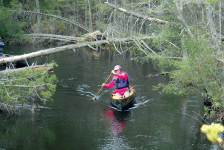
Functional axle solo:

1775707702256.png

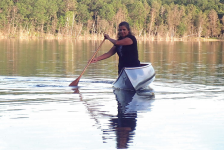
Interpretive axle solo:

1775707761973.png
 
Good article with good photos for reference, although I think more photos showing the artistic flair of interpretive freestyle would help get the distinction across. As the photo of Bob and Elaine hint at, there's more to it than the advanced skill of heeling to the rail.

It is unfortunate, though, that there isn't a simple term for functional freestyle, similar to how in the Nordic skiing world "skating" is used to describe "freestyle skiing". I haven't come up with a good term for functional freestyle canoeing but "functioning", "canoodling", and "quadranting" just don't work. :)
 
Last edited:

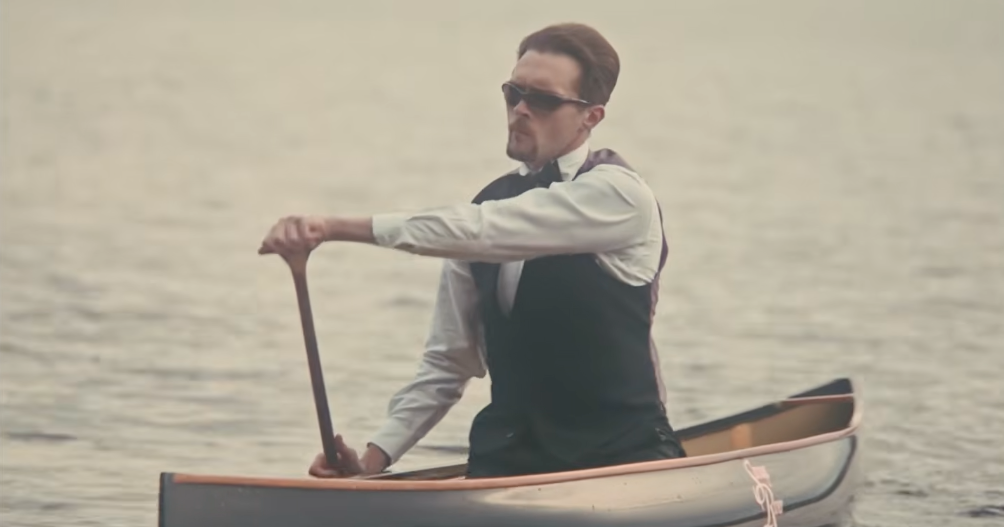
I haven't seen this so-called mockumentary, but it seems to be built on this false premise from the linked article:

"The sport, which has a small but passionate fanbase, involves performing complex choreographed canoe maneuvers set to music like a figure skating routine. Competitors demonstrate extraordinary control of their boats, but often also perform with emotion, narrative flair and even costumes, making it as much art as sport."

No, that's not "the sport". That's a description of interpretive freestyle demonstrations, not of functional freestyle sport canoeing. As far as I know—and I'll accept corrections if I'm wrong—there have not been any formal interpretive freestyle competitions with costumes and music for more than a decade. Interpretive freestyle exists now mainly as short, voluntary demonstrations at the end of freestyle clinics.

All the freestyle clinics, or symposiums, or rendezvous, or workshops, or whatever the events may be called these days, simply teach basic-to-advanced canoe control moves—the same thing you would have learned from Bill Mason 50 years ago, or Reg Blomfield and Omer Stringer 100 years ago, or Henry Rushton 150 years ago, or any native North American in a birchbark canoe 5,000 years ago.

I have never really liked the word "freestyle" because it implies that the activity is something other than basic-to-advanced flatwater canoeing technique. I much prefer the historically earlier term "sport canoeing", initially advocated by Patrick Moore, Mike Galt, Harold Deal and others in the late 1970s and early 1980s. What they were trying to convey by that term was learning how to enjoy the motion pleasure achievable in a recreational canoe, solely for the sport of that canoeing motion pleasure itself, as opposed to using a canoe as a vehicle or platform for some other flatwater activity such as fishing, hunting, carrying cargo, tripping, photography, racing, or canoodling.

In addition, all intermediate to advanced whitewater canoeing employs boat control principles analogous to those taught in flatwater canoe clinics.
 
I agree that the article doesn't distinguish between "functional freestyle" and "interpretive freestyle". I can tell you, from 1st hand knowledge, that the film only deals with the interpretive end and that the film uses the "sport" as a means to develop the script's characters rather than to showcase freestyle. I too, wish that the generalized term of "freestyle" lacks clarity, and prefer the term "sport canoeing" although that term too, could be interpreted in unintended ways.

Having been involved with freestyle as well as other canoeing disciplines, for many years, I am convinced that we teach certain methods or perhaps refinements of boat control that are not taught or certainly not emphasized in other canoeing disciplines.

As Glenn noted, there have not been any formal freestyle competitions for a decade or so. It's not that we've given up on the concept but that we simply haven't had the critical mass necessary to hold meaningful competitions. Attendance at freestyle symposia has waned in recent years as has attendance at other canoeing venues. Those K craft as ell as other interests have siphoned off many potential participants. In the meantime, we still offer classes geared to the interpretive side of freestyle and they are attended by a few who are hopeful (as am I) for a resurgence.
 
Good article with good photos for reference, although I think more photos showing the artistic flair of interpretive freestyle would help get the distinction across. As the photo of Bob and Elaine hint at, there's more to it than the advanced skill of heeling to the rail.

It is unfortunate, though, that there isn't a simple term for functional freestyle, similar to how in the Nordic skiing world "skating" is used to describe "freestyle skiing". I haven't come up with a good term for functional freestyle canoeing but "functioning", "canoodling", and "quadranting" just don't work. :)
I feel qualified to speak to the term "functional freestyle" as I believe, I coined that phrase. When I began learning the various maneuvers that are taught in the freestyle curriculum, I recognized how they applied to and improved my performance in both touring and whitewater. Other freestyle paddlers with whom I paddled often, noticed the same. The intent was to adapt the established freestyle curriculum (some might say the interpretive freestyle curriculum) to functional, everyday paddling. Perhaps, in a way it was to return freestyle to it's own routes. Having been exposed to the, then established, touring and whitewater curricula, none of which focused on the nuances of freestyle, I felt it necessary to incorporate the term freestyle in this adaptation. Perhaps not the perfect description, but the best I could come up with.
 
I feel qualified to speak to the term "functional freestyle" as I believe, I coined that phrase. When I began learning the various maneuvers that are taught in the freestyle curriculum, I recognized how they applied to and improved my performance in both touring and whitewater. Other freestyle paddlers with whom I paddled often, noticed the same. The intent was to adapt the established freestyle curriculum (some might say the interpretive freestyle curriculum) to functional, everyday paddling.
The idea of functional freestyle does make sense if you think about canoeing narrow streams or along a shoreline and purposefully maneuvering through all the inherent obstacles while adding a bit of flare and elegance. Otherwise, I guess it would be sport canoeing? ;)

I have never really liked the word "freestyle" because it implies that the activity is something other than basic-to-advanced flatwater canoeing technique. I much prefer the historically earlier term "sport canoeing", initially advocated by Patrick Moore, Mike Galt, Harold Deal and others in the late 1970s and early 1980s.
I agree, "freestyle" implies something other than common technique or usage, thus my comment about coming up with another term for "functional freestyle". (Thanks, Marc, for the back story.) To me, it's the artistry of freestyle that makes it freestyle, e.g., freestyle skiing, freestyle skating, and freestyle BMX. I'm not sure what to make of freestyle wrestling or freestyle football.

The term "sport canoeing", as you and Marc suggest, may be a more applicable description of functional freestyle and follows the logic behind sport bikes, sports cars, and sport carvers (alpine skis). You don't need a sport canoe, sport bike, sports car, or sport carvers to have fun but they do add a little something to the activity.
 
Last edited:
Back
Top Bottom