• Happy National Lipstick Day! 💄💋

From someone trapped in the Wabakimi fires

I used to use wool, but got talked into the polypro stuff, stays warm when wet, dries quickly, lighter weight. So this information about wool and fire is new to me and worth consideration.
I still have some polypro or polyester long johns, but generally only use them in the wet months now- not so much for insulation, but as a wicking layer to drive moisture outwards from my body, it helps prevent that clammy, chilly feeling you tend to get on late spring, high humidity days when everything seems to be dripping...
 
Thanks Robin. Well written and thoughtfully presented. Very objective writing.

I would take this opportunity to remind people that we create fire resilience with logging and thinning. Forests need to have the right spacing and density to withstand fires. There is way too much emphasis on fire suppression which is part of the reason North American forests are so fire prone. Fire is acceptable when it stays on the ground, but we want to keep it out of the crowns.

Nobody loves forests more than I do, but Protectionism has gotten us into some serious trouble on both sides of the Canadian Border. We love forests by managing them so they can maximize their growth, withstand fire, provide wildlife habitat and plenty of other values including outdoor rec.

 
Thanks Robin. Well written and thoughtfully presented. Very objective writing.

I would take this opportunity to remind people that we create fire resilience with logging and thinning. Forests need to have the right spacing and density to withstand fires. There is way too much emphasis on fire suppression which is part of the reason North American forests are so fire prone. Fire is acceptable when it stays on the ground, but we want to keep it out of the crowns.

Nobody loves forests more than I do, but Protectionism has gotten us into some serious trouble on both sides of the Canadian Border. We love forests by managing them so they can maximize their growth, withstand fire, provide wildlife habitat and plenty of other values including outdoor rec.
Have you ever been in Canada's boreal forest??? and I mean the real forest, not the cut over stuff along canoe routes?
you're talking about an eons- old forest five times the size of Texas, most of which hasn't even been accessed in known memory. there are no roads for hundreds of miles, and other than the odd, small, fly- in only communities, no people, I've seen areas up there where the nearest road is over 400 miles away...
those forests are impossible to "manage" and neither should they be- because with the Siberian forests and the Amazon they are the lungs of the world. you're talking about 270 MILLION hectares, or over a MILLION square miles of trackless forest. they were never managed and can't be with modern methods, as for not being "optimum", Whose optimium are you speaking of??? as far as nature is concerned they are because they're exactly as nature intended them to be- untouched by the hands of man. the only managed fires up there are the ones started by man simply because they're the only ones accessible, lightning- started fires are left to burn naturally- it's part of growth, death, and regeneration, in fact many species up there NEED fire to take seed- black spruce and jack pine cones need a minimium of 60C/140F to even open without fire those trees would go extinct, in fact a nursey I know literally bakes their black spruce cones in an oven for a full day to collect the seeds
The Boreal is no city park, it's raw, untouched nature at it's best
 
Wow, I've seen mother nature when she's angry (Cat 5 Hurricanes) but that seems about as scary as it can get, and yes .. that canoe was what kept those guys safe and nimble in ever changing circumstances!!
 
There is way too much emphasis on fire suppression which is part of the reason North American forests are so fire prone.
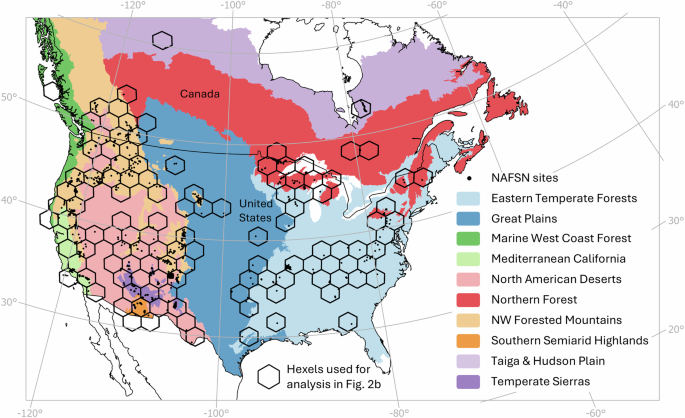
That is true for areas of North America where fire suppression has been relatively effective. Between lightning strikes and indigenous burning, pre-settlement fire return intervals maintained a natural balance (and mosaic) of low severity surface fires and high severity replacement fires. For areas where fire suppression has not had a significant influence, such as the northern boreal forest and tiaga that scoutergriz mentions, the increase in fire severity and burn area is largely due to climate change. And this phenomenon is causing extreme fire behavior throughout the temperate regions of the world, not just in Canada.

The linked paper discusses this in detail. Jump to the Discussion section for an interesting read, especially the theme of fire as a stabilizing feedback and destabilizing feedback.

 
scoutergriz,
Thanks for your description. No. I have spent a little in the Yukon, and many trips to BC, but lots of time in Alaska. SE Alaska is really wet and has few fire problems.
Fire suppression has been used on a large scale in Canada but maybe not in the remote conditions you have described.
 
Last edited:
tketcham,
We know the Earth is warming because we can measure it. But 1.5 degrees C explains nothing.
Overstocked forests with too many trees per acre make droughts much worse. This is a result of fire suppression and lack of logging. Remote country does not get logged, but sometimes it receives fire suppression. Often there is air support but sometimes little ground support.
 
Back
Top Bottom